30-Second Brief
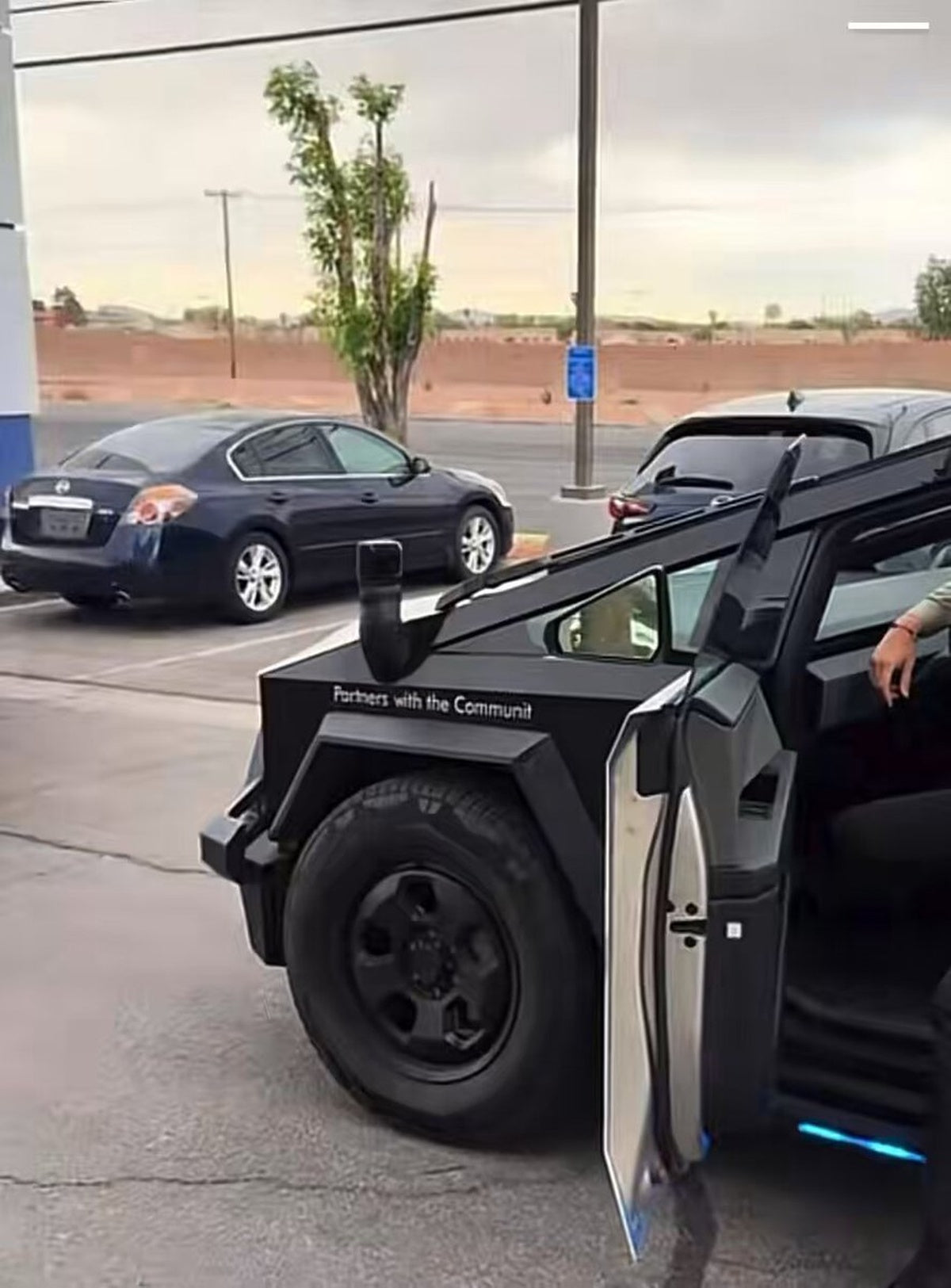
The News: The Las Vegas Metropolitan Police Department's fleet of 10 Tesla Cybertruck patrol vehicles is projected to save $9,500 per unit annually in fuel and maintenance — and the trucks carry roughly twice the American-made parts content of comparable Ford and Chevy police vehicles.
Why It Matters: This is the clearest real-world cost case yet for EV adoption in law enforcement, and it signals that the Cybertruck's value proposition extends well beyond consumer appeal into institutional fleets.
Source: @SawyerMerritt on X
Cybertruck Police Vehicles Save LVPD $9,500 Per Year — And They're the Most American-Made in the Fleet
The Tesla Cybertruck's case as a serious law enforcement vehicle just got a lot more concrete. New figures from the Las Vegas Metropolitan Police Department (LVMPD) show each Cybertruck patrol unit is projected to save $9,500 annually in fuel and maintenance costs — and over a five-year service life, that compounds into a minimum of $47,540 in savings per vehicle. Add a domestic content advantage that leaves Ford and Chevy in the dust, and the numbers make a compelling argument for EV patrol fleets.

📊 Key Figures
| Metric | Value | Context |
|---|---|---|
| Annual savings per vehicle | $9,500 | Fuel + maintenance combined |
| Annual fuel savings range | $8,800–$12,000 | Higher with current gas prices |
| 5-year savings per vehicle | $47,540+ | Projected minimum |
| Cybertruck 5-yr operating cost | ~$24,000 | vs. ~$84,000 for Ford Police Interceptor |
| 5-yr cost gap vs. Ford | $60,000 | Per vehicle |
| Cybertruck domestic content | 82.5% | 2024 Made in America Auto Index |
| Ford/GM fleet domestic content | ~50% | Sales-weighted average |
| LVMPD fleet size | 10 units | Unveiled October 2025 |
| Funding source | $2.7M donation | Ben & Felicia Horowitz — no public funds |
The Cost Case, Broken Down
The LVMPD unveiled its 10-truck Cybertruck fleet in October 2025, with acquisition and outfitting funded entirely by a $2.7 million private donation from venture capitalist Ben Horowitz and his wife Felicia — meaning zero public tax dollars were committed to the purchase. Each vehicle was valued between $80,000 and $115,000 before law enforcement modifications, which were handled by Unplugged Performance's UP.FIT division.
Once in service, the operating economics shift dramatically in the Cybertruck's favor. According to figures cited by the official Cybertruck account on X, the five-year operating cost for a Cybertruck patrol unit sits at approximately $24,000 — compared to nearly $84,000 for a Ford Police Interceptor Utility. That's a $60,000 gap per vehicle over a standard service life. Multiply that across even a modest departmental fleet and the numbers become impossible to ignore for any budget-conscious police chief.
The fuel savings alone are striking: projected at $8,800 to $12,000 per year, with the higher end increasingly relevant given current gas prices. Maintenance savings add another $3,540 over five years — fewer oil changes, brake jobs, and powertrain service calls all contribute to a lower total cost of ownership that EVs structurally deliver over combustion alternatives.
Most American-Made Police Vehicle on the Road
The domestic content story is equally notable. According to American University's Kogod School of Business 2024 Made in America Auto Index, the Tesla Cybertruck carries a total domestic content of 82.5% — ranking it third overall across all vehicles in the index. For context, the index counts parts originating in either the United States or Canada as domestic content.
Ford and General Motors, by comparison, average around 50% domestic content on a sales-weighted fleet basis, with more than half of their models sitting at 55% or above. That means the Cybertruck carries roughly twice the American-made parts of the legacy police vehicle incumbents — a significant talking point for any municipality facing political pressure to buy American.
🔭 The BASENOR Take
Timeline: LVMPD fleet unveiled October 2025 → Five-year cost projections now being publicized → April 2026
Impact Level: 🟠 Medium-High — Institutional fleet adoption is a slow-burn story, but the financial data here is unusually concrete.
Confidence: High — Figures sourced from LVMPD projections and the official Cybertruck X account, corroborated by independent reporting.
📰 Deep Dive
What makes the LVMPD deployment meaningful beyond the headline numbers is that it represents a real-world, operational test — not a controlled pilot or a press release projection. These trucks are on active patrol duty, accumulating the kind of mileage and duty-cycle stress that exposes weaknesses in any vehicle platform. The fact that the cost savings figures are being published and promoted suggests the early operational data is holding up.
The American-made content angle is particularly well-timed. With domestic manufacturing a politically charged topic in 2026, any police department considering a fleet refresh can now point to the Cybertruck as the most domestically sourced option available — not just competitive with legacy brands, but significantly ahead of them. That's a procurement argument that works across the political spectrum.
The $60,000 per-vehicle five-year cost advantage over a Ford Police Interceptor is the number that should get fleet managers' attention. For a department running 100 patrol vehicles, that's a potential $6 million in operational savings over five years — enough to fund significant staffing or equipment investments. The private funding model used by LVMPD (removing the upfront capital barrier entirely) is also a template other cities could replicate.
The longer-term question is whether the Cybertruck's form factor — built for highway patrol, visibility, and presence — fits the full range of law enforcement use cases, from urban beat work to pursuit scenarios. LVMPD's operational data over the next 12–18 months will answer that more definitively than any projection. But on pure economics and domestic content, the case is already made.
Related Gear
Gear up your Cybertruck with tested, custom-fit BASENOR accessories — shop Cybertruck accessories →
Sources & reporting notes
The links below identify the material source records used for this report.
- @SawyerMerritt on X (2026-04-27T21:28:38.000Z) — Direct source
Source links are preserved as published or accessed. See our editorial standards and corrections policy.
The BASENOR Editorial Desk covers Tesla, SpaceX, and related technology, curating reporting from primary sources — official accounts, regulatory filings, and software release data. Every article passes source-record and fact-checking review before publication. About the newsroom.
This report was curated by the BASENOR Editorial Desk from the sources listed above. Read our editorial standards or email editorial@basenor.com to report an error.