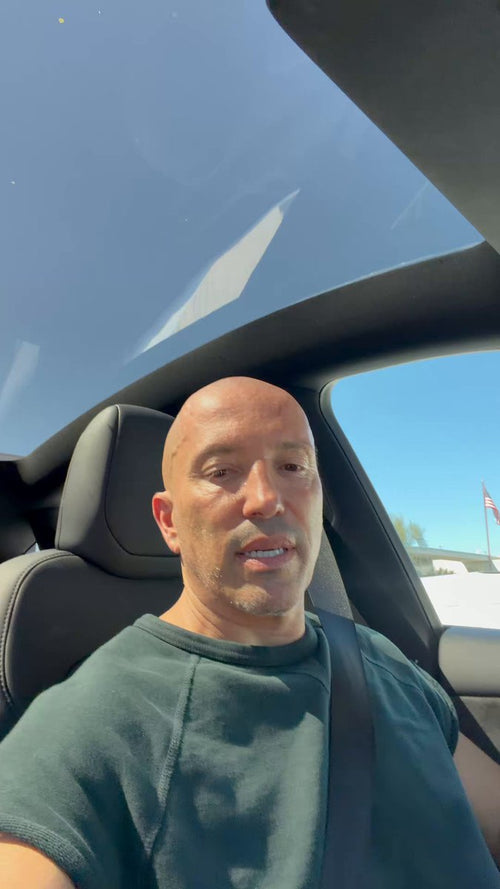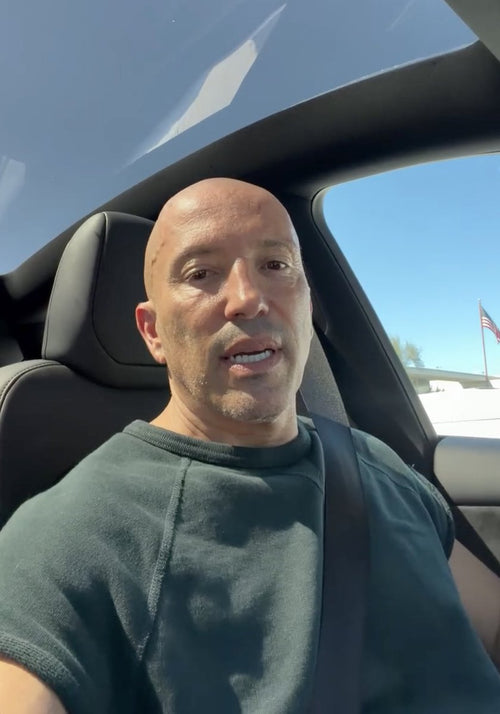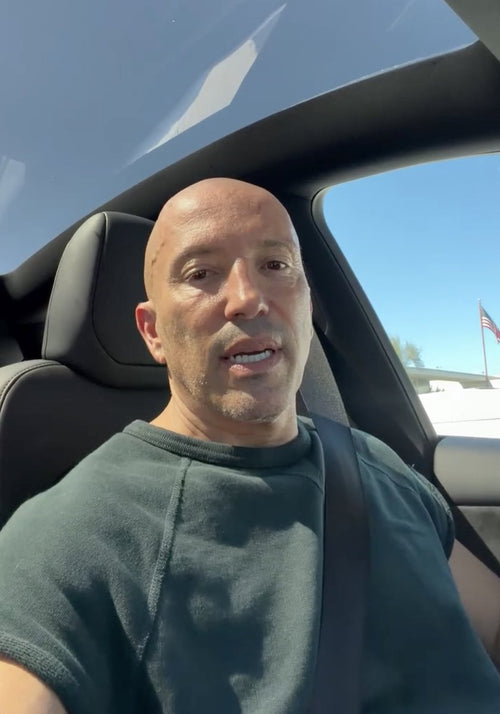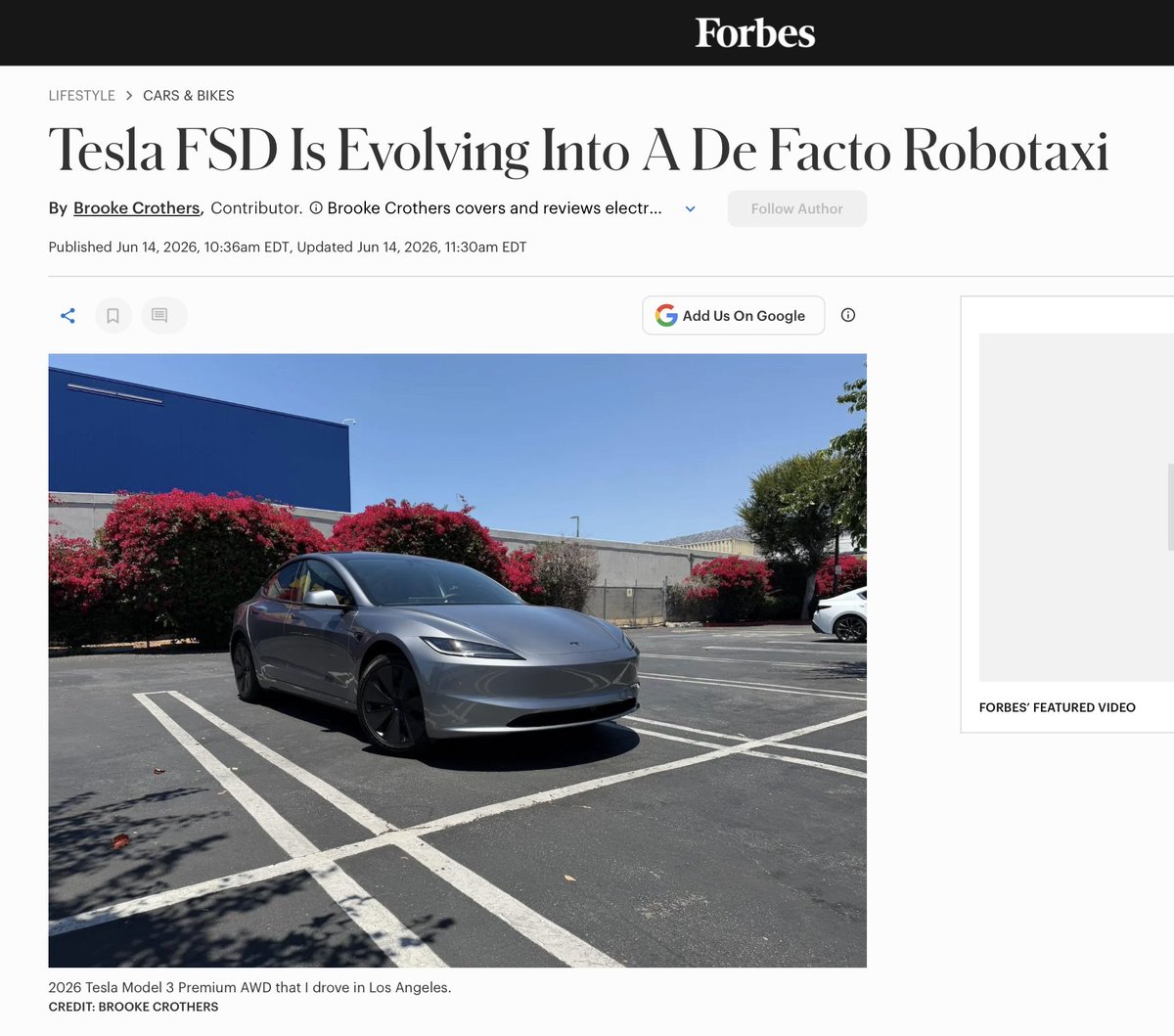
A small but telling data point surfaced on X this weekend: nine Tesla owners tracked by @fsd_database logged zero manually driven miles over the past week. Every mile was handled by Full Self-Driving (Supervised). Whole Mars Catalog called it what it is — a de facto personal robotaxi — and the numbers are hard to argue with.


What the Data Actually Tells Us
Nine users is not a statistically significant sample. But it's the right kind of signal — the kind that shows up before a trend becomes undeniable. These aren't researchers or engineers running controlled tests. They're everyday owners who trusted FSD enough to let it handle their entire week of driving without touching the wheel for a single corrective intervention.
The @fsd_database platform tracks real-world FSD usage, including intervention-free streaks and distances. The fact that a growing cohort of owners is reaching the end of a full week without manual input suggests the system has crossed a practical reliability threshold — at least for certain driving environments and commute profiles.
This tracks with what Tesla has been demonstrating at the product level. In April 2026, the company officially documented an 850-mile journey completed by FSD (Supervised) with zero human interventions, including autonomous Supercharger stops and destination parking. That was a controlled showcase. What @fsd_database is capturing is the organic, unscripted version happening in driveways and commutes across the country.
The Gap Between 'Supervised' and 'Feels Autonomous'
There's an important legal and technical distinction to keep in mind. Tesla's Full Self-Driving (Supervised) is still classified as an advanced driver-assistance system in every jurisdiction as of mid-2026. It requires the driver to remain attentive and ready to intervene at any moment. That hasn't changed.
What has changed is how often intervention is actually needed. The latest version rolling out to Hardware 4 vehicles — FSD v14.3.4 — includes a rewritten AI compiler and runtime (MLIR2) that Tesla says delivers 20% faster reaction times, along with upgraded reinforcement learning and neural network vision encoders for improved performance in low-visibility and complex urban scenarios. For owners in the @fsd_database cohort, the gap between 'supervised' on paper and 'autonomous in practice' is apparently narrow enough to go a full week without touching the wheel.
Elon Musk stated in April 2026 that unsupervised FSD for consumer vehicles — the version that requires no driver presence — is not expected until Q4 2026 at the earliest. Until then, the legal framework requires a human in the seat. But the behavioral reality, for at least some owners, is already looking a lot like what Tesla has been promising for years.
What This Means for the Broader Robotaxi Thesis
Tesla's long-term business case has always rested on the idea that its vehicles would eventually generate revenue as autonomous taxis when not in use by their owners. The Cybercab is the dedicated hardware play for that vision. But the consumer FSD fleet — millions of vehicles already on the road — is the software play, and it's the one that's showing real-world results right now.
When owners stop touching the wheel for an entire week, it does two things simultaneously: it validates the technology in the most credible way possible (real use, real roads, no cherry-picked conditions), and it shifts the psychological relationship between owner and vehicle. A car you never manually drive isn't really a car you drive — it's a car that drives you. That's the mental model Tesla needs the market to adopt before unsupervised autonomy and paid robotaxi services become a mainstream proposition.
The nine owners in this week's @fsd_database snapshot are early adopters, almost certainly in favorable driving environments. But every technology that eventually becomes normal starts with a small group of people using it as if it already is. The question now is how quickly that cohort grows — and whether FSD's reliability holds as it reaches drivers with more varied routes, more challenging conditions, and less patience for edge cases.
📋 Tracking Tesla software? See every firmware, FSD and app version in one place in our Tesla Software Update Tracker.
🚕 Following the Robotaxi rollout? See every operating city, launch date and announced market in our Tesla Robotaxi Tracker.
Related Gear
Gear up your Tesla with tested, custom-fit BASENOR accessories — shop Tesla accessories →
Sources & reporting notes
The links below identify the material source records used for this report.
- @wholemars on X (2026-06-14T16:16:43.000Z) — Direct source
- @wholemars on X (2026-06-14T16:04:17.000Z) — Direct source
Source links are preserved as published or accessed. See our editorial standards and corrections policy.
The BASENOR Editorial Desk covers Tesla, SpaceX, and related technology, curating reporting from primary sources — official accounts, regulatory filings, and software release data. Every article passes source-record and fact-checking review before publication. About the newsroom.
This report was curated by the BASENOR Editorial Desk from the sources listed above. Read our editorial standards or email editorial@basenor.com to report an error.