The News: NASA Administrator Jared Isaacman has announced a sweeping overhaul of the Artemis lunar program, restructuring mission timelines and doubling down on SpaceX's Starship as the primary vehicle to land humans on the Moon.
Why It Matters: This is a fundamental shift away from the legacy contractor model that defined NASA for decades — and it puts SpaceX's Starship at the center of humanity's return to the lunar surface.
Source: @SciGuySpace (Eric Berger) on X
Isaacman Draws a Clear Line: Vehicles Over Contracts
Eric Berger — one of the most reliable voices in space journalism — put it bluntly on X. Jared Isaacman, now NASA Administrator, has chosen to prioritize the hardware that actually gets humans to the Moon over the traditional cost-plus contracting arrangements that have historically enriched aerospace incumbents while delivering delayed, over-budget results.

That framing — vehicles to get us on the Moon versus vehicles to enrich contractors — is a pointed critique of the old NASA model. It signals that Isaacman is willing to make enemies in the traditional aerospace world in order to actually execute on the mission.
📊 Key Figures
| Metric | Value | Context |
|---|---|---|
| SpaceX HLS Total Contract Value | ~$4 billion | Covers Artemis III & IV landers |
| Funds Already Disbursed | ~$2.7 billion | 49 milestones completed |
| Starship Test Flights | 11 | Core vehicle development |
| Artemis III Rescheduled | 2027 | LEO tech demo, no lunar landing |
| First Crewed Lunar Landing Target | Artemis IV — 2028 | Two landings planned in 2028 |
What Actually Changed in the Artemis Program
The overhaul Isaacman announced on February 27, 2026 restructures Artemis in a meaningful way. Artemis III — originally the mission that was supposed to land astronauts on the Moon — has been redefined entirely. It will now fly in 2027 as a technology demonstration in low Earth orbit, with astronauts testing docking operations with commercial lunar landers from both SpaceX and Blue Origin. No lunar surface. No flags and footprints. Just rigorous systems validation before the real attempt.
The actual crewed lunar landing has been pushed to Artemis IV, targeted for 2028. Notably, NASA is now planning two lunar landing missions — Artemis IV and V — within that same year. That is an aggressive cadence, and it only works if the commercial lander development stays on schedule.
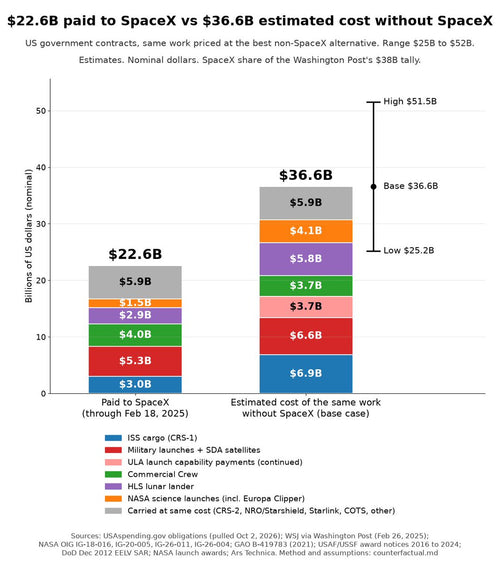
SpaceX's role in all of this is central. The company was originally awarded a $2.9 billion contract in 2021 to develop a lunar-capable Starship variant for Artemis III. It was subsequently selected for Artemis IV as well. Total NASA contracts for the Starship Human Landing System now sit at approximately $4 billion, with roughly $2.7 billion already paid out across 49 completed development milestones. Eleven Starship test flights have advanced the core vehicle. The lunar lander variant — a significantly modified version of the standard Starship — is a separate and more complex engineering challenge, but the program is clearly progressing.
🔭 The BASENOR Take
Timeline: Artemis III LEO demo in 2027 → First crewed lunar landing (Artemis IV) in 2028 → Second landing (Artemis V) also 2028
Impact Level: 🔴 High — This is the most significant restructuring of NASA's human spaceflight strategy in years
Confidence: ⭐⭐⭐⭐ — Announced by the NASA Administrator, corroborated by multiple verified sources
Berger's framing cuts to the core of what Isaacman is doing. The old model — cost-plus contracts with legacy aerospace primes — produced the Space Launch System at roughly $4 billion per launch and years of schedule slippage. The new model bets on commercial providers, primarily SpaceX, to deliver actual flight hardware on compressed timelines for a fraction of the cost.
This is not just a budget decision. It is a philosophical one. Isaacman, who flew to orbit on a SpaceX Crew Dragon as a private astronaut, understands the commercial model from the inside. He knows what iterative development at SpaceX looks like versus what a traditional government-managed program delivers. His willingness to restructure Artemis III — removing the lunar landing and turning it into a systems test — suggests he would rather validate the hardware properly than rush to a Moon landing for political optics and risk a catastrophic failure.
For the broader space industry, the signal is clear: the era of guaranteed cost-plus contracts for legacy primes is ending. SpaceX's continued dominance in NASA's human spaceflight programs is now structural, not incidental. Blue Origin's inclusion in the Artemis III docking demonstration suggests some competitive balance is being maintained, but SpaceX holds the primary HLS contract for the actual lunar landing.
The 2028 target for two crewed lunar landings is ambitious by any standard. Whether Starship's lunar variant is ready — and whether NASA's Gateway station elements are in place — will determine if that timeline holds. But the direction is set, the contracts are funded, and the administrator has made his priorities explicit.
🚀 Following the Starship program? See every test flight, official outcome and the next launch window in our SpaceX Starship Tracker.
Sources & reporting notes
The links below identify the material source records used for this report.
- @SciGuySpace on X (2026-03-06T23:42:20.000Z) — Direct source
Source links are preserved as published or accessed. See our editorial standards and corrections policy.
The BASENOR Editorial Desk covers Tesla, SpaceX, and related technology, curating reporting from primary sources — official accounts, regulatory filings, and software release data. Every article passes source-record and fact-checking review before publication. About the newsroom.
This report was curated by the BASENOR Editorial Desk from the sources listed above. Read our editorial standards or email editorial@basenor.com to report an error.