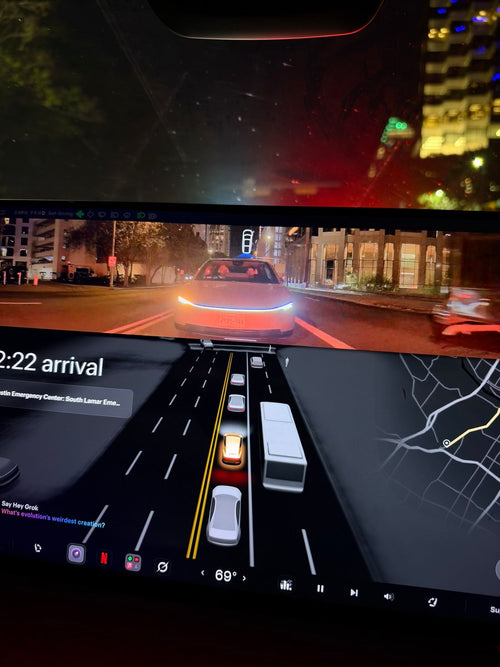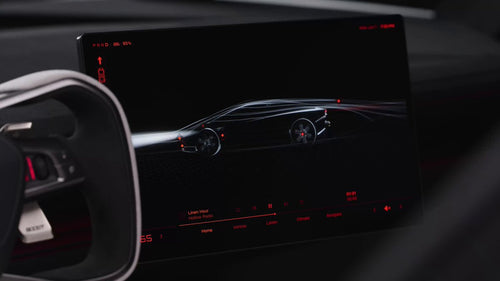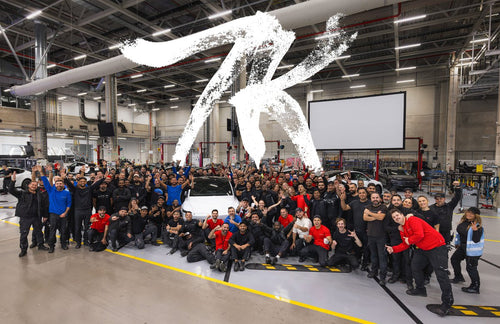
The U.S. National Highway Traffic Safety Administration has opened a formal audit query into Tesla's certification of up to 1,000 Cybercabs — the steering-wheel-free, pedal-free two-seater that just began carrying paying passengers in Austin. Regulators want to know how Tesla self-certified a vehicle that lacks the traditional manual controls assumed by many Federal Motor Vehicle Safety Standards, and whether the automaker's rationale for skipping certain requirements holds up. The probe lands less than 48 hours after Cybercab rides became publicly available on the Robotaxi platform, and it puts the entire commercial rollout under a regulatory microscope.

What NHTSA Is Actually Investigating
According to NHTSA, the agency opened Audit Query AQ26002 on September 3-4, 2026. Unlike a defect investigation, an audit query is a paperwork-and-process inquiry: regulators want the technical data and reasoning Tesla used to declare the Cybercab compliant with FMVSS, and specifically which requirements Tesla deemed inapplicable because the vehicle has no driver.
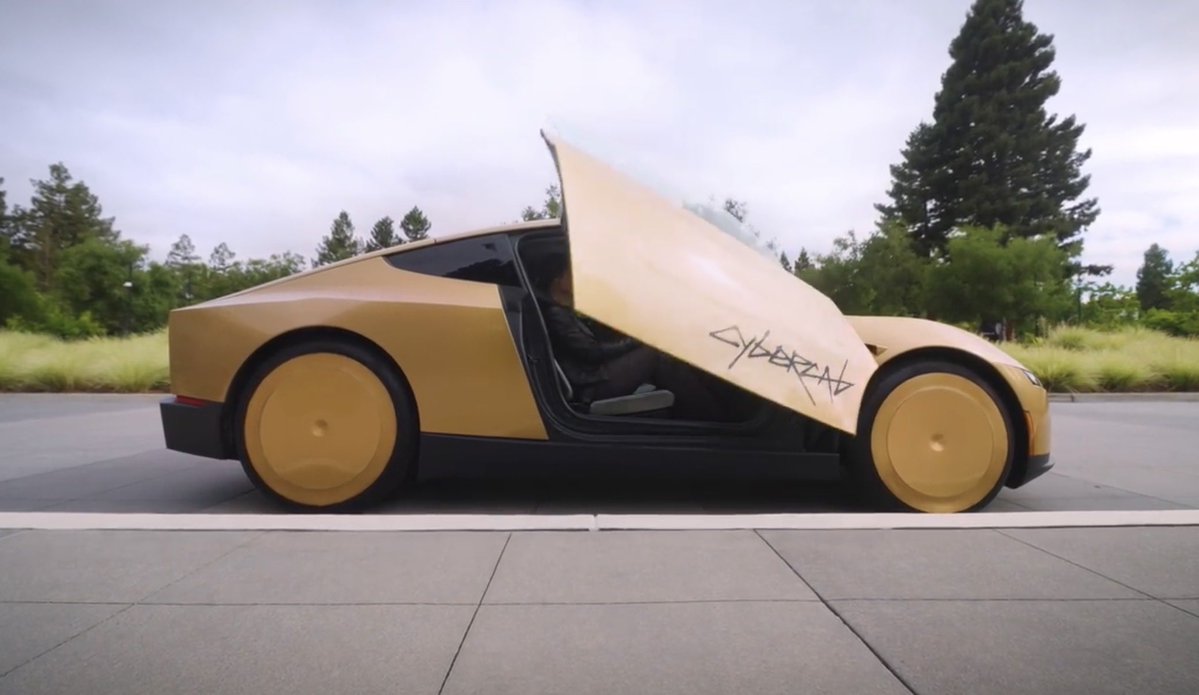
The Cybercab is a two-passenger battery-electric vehicle with gull-wing doors, no steering wheel, no pedals, and no side mirrors. Many FMVSS rules — mirror placement, steering column crash performance, driver airbag deployment, brake pedal force — assume a human driver sits in a specific position. Tesla self-certified the vehicle anyway, which is legally permitted under the U.S. system but subject to NHTSA review.
NHTSA Administrator Jonathan Morrison framed the inquiry carefully: "NHTSA fully supports the safe development and deployment of automated vehicles. But as the federal regulator, we need to ensure that all of our laws are followed," according to statements reported alongside the audit query opening.
Where the Cybercab Stands Right Now
| Item | Status |
|---|---|
| Pilot production start | February 2026, Gigafactory Texas |
| Fleet registered in Texas | ~45 units by late August 2026 |
| Audit query scope | Up to 1,000 vehicles |
| Commercial launch | Austin, Sept 3, 2026 (limited); public Sept 4, 5 p.m. CT |
| Range / battery | ~293 miles / 48 kWh (per nhtsa.gov filings) |
According to Electrek and Teslarati coverage of the audit query, Tesla has continued taking rides during the investigation — the audit does not require a service pause. But if NHTSA escalates from audit query to defect investigation or recall, that changes quickly.
Action Plan: What Tesla Riders and Owners Should Do
An audit query is not a stop-service order, and it is not directed at Tesla's consumer vehicles. Nothing here affects your Model 3, Y, S, X, or Cybertruck. Still, if you're in Austin or planning to try a Cybercab ride, there are a few concrete steps worth taking.
1. If You're Booking a Cybercab Ride in Austin
The Robotaxi service remains live as of publication. If you book a ride, note that Cybercab and Model Y robotaxis are dispatched from the same fleet — the app currently does not let you filter by vehicle. If you specifically want (or want to avoid) a Cybercab, check the vehicle assignment in the app before confirming, and cancel within the free-cancellation window if the match isn't what you wanted.
2. Document Anything Unusual
If you take a Cybercab ride and experience anything worth flagging — unexpected stops, door issues, HVAC problems, unusual routing, or any safety concern — file a report two places: inside the Tesla app (rider feedback) and directly with NHTSA at nhtsa.gov/report-a-safety-problem. Audit queries frequently expand based on consumer complaint data, and rider-side reports are one of the few external signals regulators can pull on a fleet this small.
3. Watch for a Status Change, Not a Headline
The meaningful escalation is not more media coverage — it's a change on NHTSA's own investigations portal from "Audit Query" to "Preliminary Evaluation" or "Engineering Analysis." Bookmark nhtsa.gov/recalls and check the Cybercab entry weekly. If the status changes, that is when service pauses, retrofits, or recalls become plausible.
4. If You Have a Cybercab Reservation
Consumer sales of the Cybercab have not begun, and the widely cited "under $30,000" price remains unconfirmed by Tesla as of September 4, 2026. If you placed a reservation, no action is needed — but do not assume delivery timing until Tesla issues a confirmation email tied to a VIN. A federal certification dispute is exactly the kind of event that can shift a delivery schedule, and reservation deposits are refundable.
5. Skip the Speculation on Recalls
Some coverage is already framing this as a step toward a mandatory recall. That is possible but not the base case. Audit queries most often resolve with Tesla submitting additional technical documentation, sometimes with a negotiated update to specific standards' applicability. A forced fleet recall on a 45-vehicle fleet would be unusual at this stage. Wait for the status change before acting on worst-case scenarios.
What to Watch Next
- NHTSA docket updates on AQ26002 — any supplementary information request (SIR) sent to Tesla will appear publicly.
- Tesla's response window — audit queries typically require a response within 30 days of the initial letter.
- Fleet expansion pace — Tesla registering additional Cybercabs in Texas or a second city (Bay Area has been previously discussed) during an open audit would signal Tesla's confidence in its self-certification.
- Robotaxi app changes — any new disclosure screens, revised terms of service, or vehicle-selection controls added in the coming weeks are worth noting.
Editor's View
Self-certification is the U.S. default — every automaker does it, and NHTSA audits after the fact. What makes this one different is that the Cybercab is the first vehicle in the modern era to launch commercially without a steering wheel, and the FMVSS rulebook simply wasn't written with that case in mind. The audit query is less a scandal than an inevitable procedural step: someone at NHTSA has to be the person who reads Tesla's rationale and either signs off or asks for more. For riders and reservation-holders, the practical answer is patience. This will play out in docket entries over weeks, not tweets over hours.
🚕 Following the Robotaxi rollout? See every operating city, launch date and announced market in our Tesla Robotaxi Tracker.
Related Gear
Gear up your Tesla with tested, custom-fit BASENOR accessories — shop Tesla accessories →
Sources & reporting notes
The links below identify the material source records used for this report.
- @TeslaNewswire on X (2026-09-04T19:33:32.000Z) — Direct source
Source links are preserved as published or accessed. See our editorial standards and corrections policy.
The BASENOR Editorial Desk covers Tesla, SpaceX, and related technology, curating reporting from primary sources — official accounts, regulatory filings, and software release data. Every article passes source-record and fact-checking review before publication. About the newsroom.
This report was curated by the BASENOR Editorial Desk from the sources listed above. Read our editorial standards or email editorial@basenor.com to report an error.