30-Second Brief
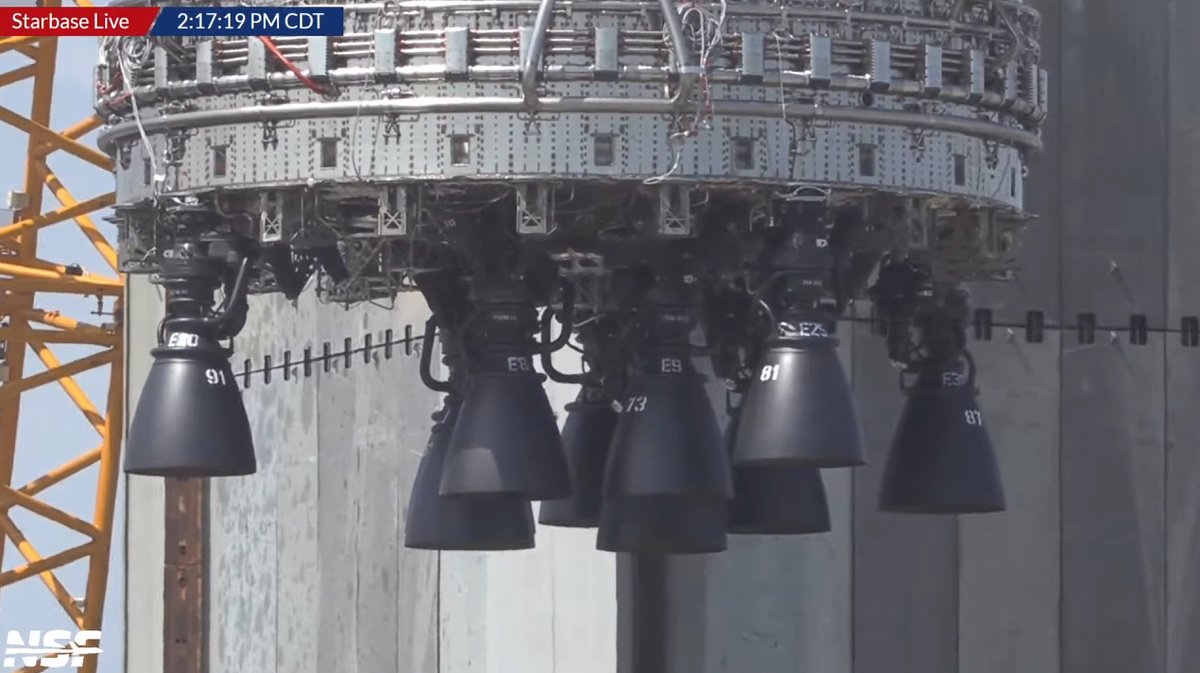
The News: SpaceX's Super Heavy Booster 19 — a Block 3 (V3) generation vehicle — is being translated to the Pad 2 mount at Starbase with 10 engines installed and confirmed.
Why It Matters: Each booster translation to the launch mount is a critical milestone on the path to the next Starship integrated flight test, and Booster 19's hardware configuration is now locked in for ground ops.
Source: @NASASpaceflight on X
SpaceX Super Heavy Booster 19 Rolls to Pad 2 With 10 Engines Confirmed
SpaceX's Super Heavy program just hit a visible checkpoint. Booster 19 — the latest Block 3 Super Heavy — is being physically translated to the Pad 2 mount at Starbase in South Texas, with NASASpaceflight confirming a 10-engine count on the vehicle. That number matters more than it might seem at first glance.

📊 Key Figures
| Metric | Value | Context |
|---|---|---|
| Booster ID | Booster 19 | Block 3 (V3) generation |
| Engines Confirmed | 10 | Raptor engines installed at time of translation |
| Destination | Pad 2 Mount | Starbase, South Texas |
| Milestone | Translation | Pre-stacking ground operations phase |
What Does "10 Engines" Actually Tell Us?
Super Heavy boosters are designed to fly with 33 Raptor engines — 13 center "sea-level" Raptors and 20 outer ring engines. Catching Booster 19 at 10 engines during translation to the pad means the vehicle is still in active engine installation, or SpaceX is staging the build process across facilities. Either way, it signals the booster is deep enough in its build sequence to begin pad-level operations, which is a significant step forward.
The Block 3 designation for Booster 19 is also worth noting. Each generation of Super Heavy has incorporated lessons from previous flights, with improvements to the heat shield, engine bay, and structural reinforcements informed by the dramatic progress SpaceX has made across Starship's integrated flight test campaign.
Why Pad 2 Matters
SpaceX has been developing Pad 2 at Starbase as a second launch complex, expanding the cadence at which Starship missions can be prepared and flown. Translating Booster 19 to Pad 2 — rather than the original Pad 1 — confirms that the second launch infrastructure is now operational enough to support active vehicle stacking and ground testing. For a program that has publicly stated ambitions around rapid reusability and high flight rates, having two functional pads is a foundational requirement.
🔭 The BASENOR Take
Timeline: Booster 19 is in active ground operations as of March 8, 2026. Engine installation appears ongoing, with pad-level stacking and testing to follow.
Impact Level: 🟡 Medium — This is a build milestone, not a launch date. But it confirms the program is advancing on schedule.
Confidence: High — Confirmed by NASASpaceflight, one of the most reliable independent observers of Starbase operations, with video documentation.
📰 Deep Dive
The translation of a Super Heavy booster to the launch mount is one of those milestones that looks routine on the surface but carries real operational weight. It means the vehicle has cleared factory-level inspections, the rollout infrastructure is functioning, and SpaceX is ready to begin the pad-level integration process — which includes stacking with a Ship, static fire testing, and ultimately flight readiness review.
Booster 19 being a Block 3 vehicle is the detail that deserves more attention. SpaceX's iterative hardware development philosophy means each new block incorporates direct lessons from flight data. The Block 3 Super Heavy generation follows a series of increasingly successful integrated flight tests, and the improvements baked into this booster reflect what SpaceX has learned about the extreme thermal and mechanical stresses of Starship's ascent and booster return profile.
The 10-engine count at time of translation is an interesting data point. It's possible additional engines will be installed at the pad, or that SpaceX is running a specific configuration for early ground tests. NASASpaceflight's coverage — backed by video — gives the community a reliable ground truth on hardware status that SpaceX itself rarely provides in real time. For anyone tracking the Starship program's cadence, this is the kind of incremental confirmation that helps build a picture of when the next integrated flight test might realistically occur.
For the broader context on SpaceX's launch program, see our SpaceX coverage for the full timeline of Starship milestones.
🚀 Following the Starship program? See every test flight, official outcome and the next launch window in our SpaceX Starship Tracker.
Sources & reporting notes
The links below identify the material source records used for this report.
- @NASASpaceflight on X (2026-03-08T19:18:04.000Z) — Direct source
Source links are preserved as published or accessed. See our editorial standards and corrections policy.
The BASENOR Editorial Desk covers Tesla, SpaceX, and related technology, curating reporting from primary sources — official accounts, regulatory filings, and software release data. Every article passes source-record and fact-checking review before publication. About the newsroom.
This report was curated by the BASENOR Editorial Desk from the sources listed above. Read our editorial standards or email editorial@basenor.com to report an error.