30-Second Brief
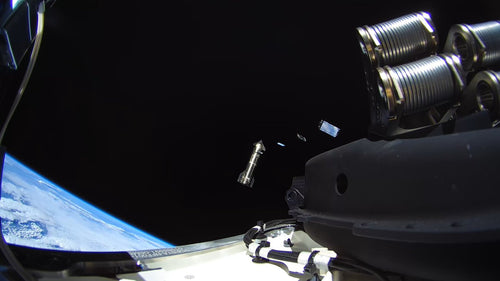
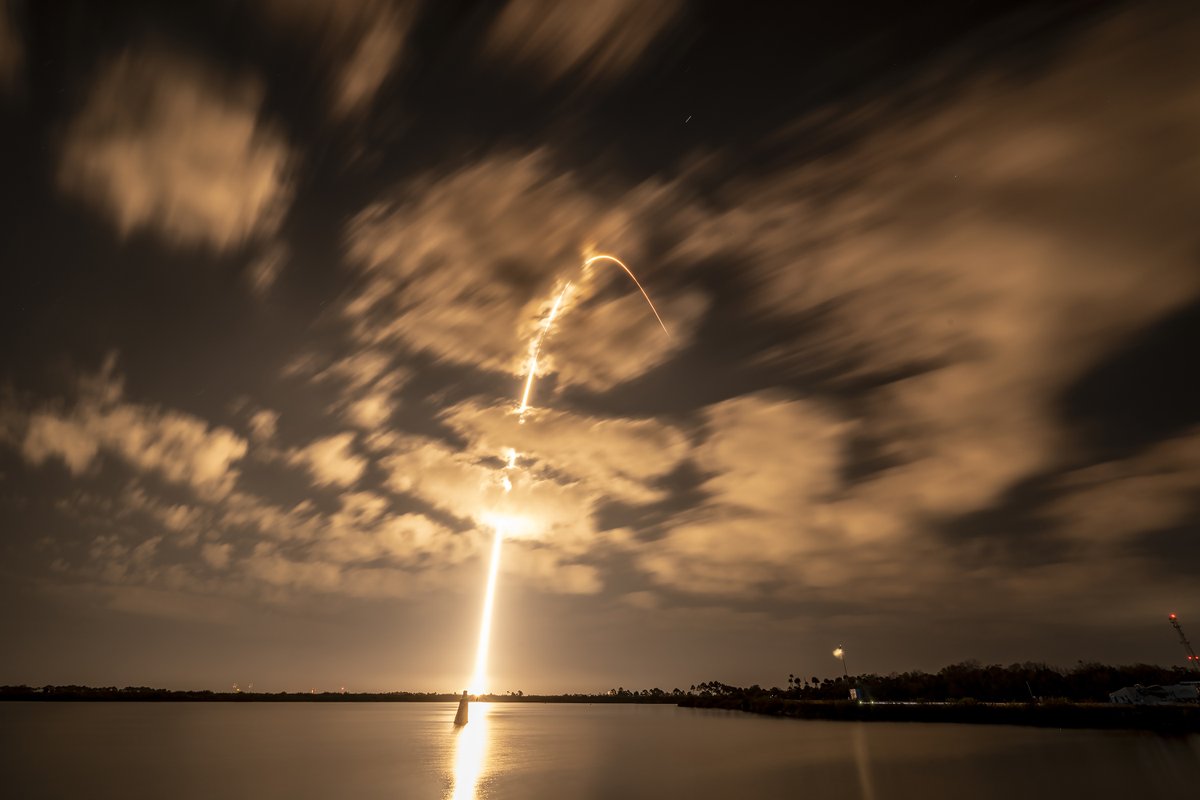
The News: SpaceX launched a Falcon 9 from Space Launch Complex 40 at Cape Canaveral on February 19, 2026, delivering 29 Starlink satellites to orbit and successfully landing booster B1077 off the coast of The Bahamas — only the second time this feat has been achieved.
Why It Matters: The Bahamian landing zone expands SpaceX's operational flexibility for high-cadence Starlink launches, and B1077's 26th flight sets yet another benchmark for booster reusability — both factors that continue to drive down the cost of Starlink connectivity.
Source: @SpaceX on X

A Routine Launch with a Historic Footnote
On the surface, a Falcon 9 carrying 29 Starlink satellites sounds like any other Thursday night in Florida. SpaceX runs these missions so frequently that liftoff from Space Launch Complex 40 at Cape Canaveral has become almost unremarkable. But the February 19 mission had a detail worth pausing on: booster B1077 touched down in Bahamian waters — only the second time SpaceX has ever pulled that off.
Liftoff occurred at 8:41 p.m. EST (01:41 UTC on February 20), and the 29 Starlink satellites were deployed approximately 64 minutes later. First-stage booster B1077 then executed a precision landing on the droneship Just Read the Instructions, positioned in the Atlantic's Exuma Sound off the Bahamian coast.

📊 Key Figures
| Metric | Value | Context |
|---|---|---|
| Launch Date | Feb 19, 2026 — 8:41 p.m. EST | SLC-40, Cape Canaveral, Florida |
| Satellites Deployed | 29 Starlink satellites | Deployed ~64 minutes after liftoff |
| Booster | B1077 — 26th flight | One of SpaceX's most-flown boosters |
| Landing Zone | Just Read the Instructions droneship | Exuma Sound, Atlantic Ocean off The Bahamas |
| Bahamas Landing Record | 2nd time ever | First occurred February 2025; clearance renewed Feb 17, 2026 |
Why Land in the Bahamas at All?
SpaceX's primary Atlantic recovery zones sit closer to Florida's coast. The Bahamas landing zone — specifically Exuma Sound — enables recovery on trajectories that would otherwise require a longer downrange flight, expanding the window of launch azimuths SpaceX can practically use without sacrificing booster reuse. It's an operational chess move: more usable trajectory angles means more scheduling flexibility, which matters enormously when you're trying to maintain a cadence of 100+ launches per year.
The Civil Aviation Authority of The Bahamas cleared SpaceX to use the zone again on February 17, 2026 — just two days before this launch — following a previous operational pause. SpaceX wasted no time putting the clearance to use. According to reports from Space.com, the sonic boom from the returning booster could be heard across parts of the Bahamas, a visceral reminder to residents that reusable rocketry has arrived in their waters.
B1077's 26th Flight: Reusability in Overdrive
Booster B1077 flying for the 26th time is the kind of statistic that was considered science fiction a decade ago. For context, the entire Space Shuttle stack flew 135 missions across 30 years of operations. B1077 alone is on track to surpass the shuttle's total flight count within the next few years — and it's just one of SpaceX's active booster fleet.
Each reflight drives down the effective cost per kilogram to orbit. That economic pressure is precisely what has allowed Starlink to expand aggressively, pushing satellite internet into regions previously considered commercially unviable. As the cost curve continues to fall, the downstream benefits — including for Tesla's in-car connectivity ambitions — become increasingly realistic.
🔭 The BASENOR Take
| Timeline | Immediate — Starlink satellites already in orbit and joining the constellation |
| Impact Level | 🟡 Medium — Incremental constellation growth; Bahamas landing is operationally significant |
| Confidence | 🟢 High — All facts sourced directly from SpaceX and corroborated by verified reporting |
📰 Deep Dive
SpaceX's Starlink constellation now numbers in the thousands of active satellites, and missions like this one are the engine behind that scale. Each batch of 29 satellites incrementally improves coverage density, reduces latency in existing service areas, and extends the geographic reach of the network. The constellation's growth directly underpins Starlink's commercial competitiveness — and SpaceX shows no signs of easing the tempo.
The Bahamas landing, though logistically minor in the grand scheme, signals something important about SpaceX's operational ambitions. Securing regulatory clearance from a sovereign nation to conduct supersonic booster recoveries in its territorial waters is not a trivial task. The fact that the Civil Aviation Authority of The Bahamas renewed that clearance — and SpaceX moved within 48 hours — speaks to the maturity of the working relationship and SpaceX's intent to use the corridor regularly going forward.
For observers watching the long arc of the Elon Musk ecosystem, the convergence is hard to miss: a reusable Falcon 9, a rapidly growing Starlink constellation, and Tesla vehicles that already carry Starlink hardware in certain configurations. The operational rhythm SpaceX maintains — launching every few days, landing boosters with near-routine precision — is what makes everything downstream possible, from satellite internet access in rural areas to the future connectivity stack of autonomous vehicles.
B1077's 26th flight is a data point in a much larger argument: that reusable rocketry isn't an experiment anymore. It's the backbone of commercial spaceflight in 2026, and it's compounding in ways that will shape the technology landscape for years to come.
Sources & reporting notes
The links below identify the material source records used for this report.
- @SpaceX on X (2026-02-20T02:53:46.000Z) — Direct source
- @SpaceX on X (2026-02-20T02:49:39.000Z) — Direct source
Source links are preserved as published or accessed. See our editorial standards and corrections policy.
The BASENOR Editorial Desk covers Tesla, SpaceX, and related technology, curating reporting from primary sources — official accounts, regulatory filings, and software release data. Every article passes source-record and fact-checking review before publication. About the newsroom.
This report was curated by the BASENOR Editorial Desk from the sources listed above. Read our editorial standards or email editorial@basenor.com to report an error.