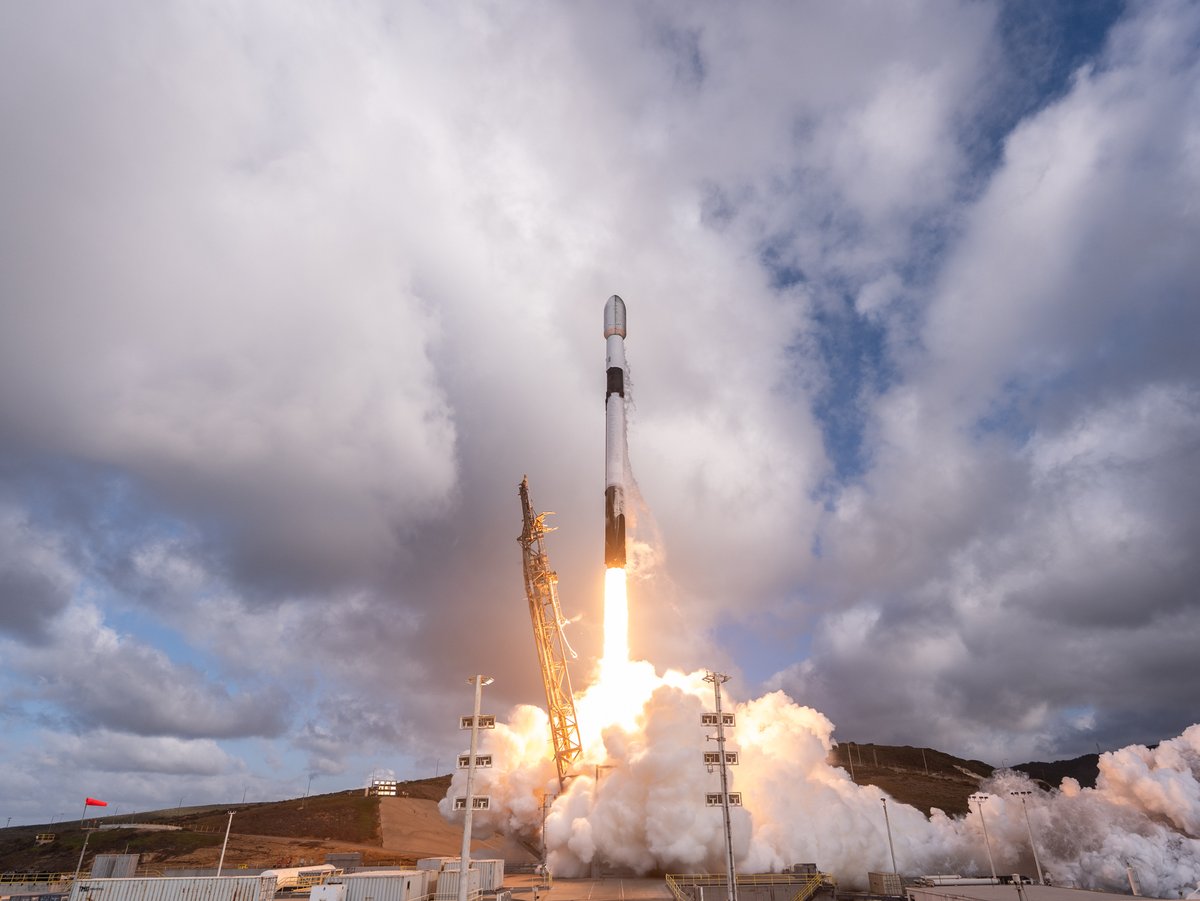
SpaceX launched 27 Starlink satellites from Vandenberg Space Force Base in California on October 22, 2026, pushing the constellation closer to full global saturation. The mission — designated Starlink Group 15-15 — is one of several SpaceX has scheduled this week alone, reflecting a launch cadence that shows no sign of slowing.

The Mission in Detail
The Falcon 9 lifted off from Space Launch Complex 4 East (SLC-4E) at 3:51 p.m. PDT, with the 27 satellites deploying into low-Earth orbit approximately 62 minutes after launch. The first-stage booster, serial number B1063, completed its 36th flight — a number that would have seemed implausible when SpaceX first demonstrated booster reuse — before landing on the droneship Of Course I Still Love You in the Pacific Ocean.

Where the Constellation Stands
According to independent tracking data cited by Space.com, roughly 11,140 Starlink satellites were operational as of October 21, 2026, out of approximately 13,015 launched since the program began. That gap — about 1,875 satellites — represents hardware in transit, deorbiting, or undergoing commissioning at any given time. Each batch of 27 moves that operational count upward incrementally, but the more significant story is the pace: SpaceX has already scheduled two additional Starlink missions from SLC-4E for October 25 and October 26, each carrying another 27 satellites.
| Metric | Figure |
|---|---|
| Satellites launched this mission | 27 |
| Booster flights (B1063) | 36 |
| Estimated operational satellites (as of Oct 21) | ~11,140 |
| Total launched since program start | ~13,015 |
| Upcoming Vandenberg missions this week | 2 (Oct 25 & Oct 26) |
The Booster Reuse Story Behind the Numbers
B1063's 36th flight is worth pausing on. When SpaceX first landed a Falcon 9 booster in December 2015, the industry consensus was that a handful of reflights would be the practical ceiling. A booster now completing its 36th mission — and landing cleanly on a droneship — is a direct enabler of the launch frequency that makes a constellation like Starlink economically viable. Without reusability at this scale, the per-satellite launch cost would make the current cadence impossible to sustain.
Three missions in roughly four days from the same launch complex, each carrying 27 satellites, means SpaceX could add more than 80 satellites to the constellation before the end of October. At that rate, closing the gap between total launched and operational satellites becomes less about hardware availability and more about ground-station processing and orbital slot coordination.
For Starlink subscribers — including the growing number using the service in remote areas, on vessels, and as a backup for terrestrial broadband — each launch translates to incremental improvements in capacity and redundancy. The network effect compounds: more satellites mean more coverage overlap in high-demand regions, which reduces congestion and supports faster speeds. Whether the constellation has reached the point where individual launches produce noticeable service improvements is harder to quantify, but the direction is clear. You can follow our SpaceX coverage for updates as the remaining October missions unfold.
Sources & reporting notes
The links below identify the material source records used for this report.
- @SpaceX on X (2026-10-24T00:14:01.000Z) — Direct source
Source links are preserved as published or accessed. See our editorial standards and corrections policy.
The BASENOR Editorial Desk covers Tesla, SpaceX, and related technology, curating reporting from primary sources — official accounts, regulatory filings, and software release data. Every article passes source-record and fact-checking review before publication. About the newsroom.
This report was curated by the BASENOR Editorial Desk from the sources listed above. Read our editorial standards or email editorial@basenor.com to report an error.