📌 UPDATE — March 4, 2026
A related Starlink mission, Starlink 10-40, successfully launched from SLC-40 in Florida today at 10:53 UTC aboard Falcon 9 booster B1080-25, also carrying 29 Starlink satellites. SpaceX and NASASpaceflight provided live coverage, with NSF capturing the distinctive "jellyfish" atmospheric effect visible during ascent. Florida residents were treated to a clear view of the rocket overhead shortly after liftoff.
🚀 Launch confirmed — @NASASpaceflight

🪼 Jellyfish effect captured — @NASASpaceflight

📡 Official SpaceX broadcast — @SpaceX

30-Second Brief
The News: SpaceX successfully launched 29 Starlink V2 Mini Optimized satellites to Low Earth Orbit from Cape Canaveral aboard a Falcon 9 rocket, in a mission designated Starlink 10-41.
Why It Matters: Every Starlink launch tightens the coverage grid and boosts throughput for existing subscribers — including Tesla owners using Starlink connectivity in remote areas and the growing fleet of vehicles and infrastructure that depend on Starlink backhaul.
Sources: @SpaceX · @NASASpaceflight
SpaceX Launches 29 Starlink Satellites to Orbit — Falcon 9 Mission 10-41 Confirmed Success
SpaceX added another chapter to its relentless Starlink expansion early Monday morning, lifting off from Florida with 29 Starlink V2 Mini Optimized satellites destined for Low Earth Orbit. The Falcon 9 rocket carrying mission Starlink 10-41 cleared the pad at Space Launch Complex 40 (SLC-40), Cape Canaveral Space Force Station, at approximately 2:57 AM UTC on March 2, 2026 — and everything went to plan.

📊 Key Figures
| Metric | Value | Context |
|---|---|---|
| Satellites Deployed | 29 | Starlink V2 Mini Optimized |
| Booster | B1078 | 26th flight |
| Launch Site | SLC-40 | Cape Canaveral, Florida |
| Target Orbit | LEO | Low Earth Orbit |
| Booster Landing | ✅ Success | 'Just Read the Instructions' droneship |
The Mission in Real Time
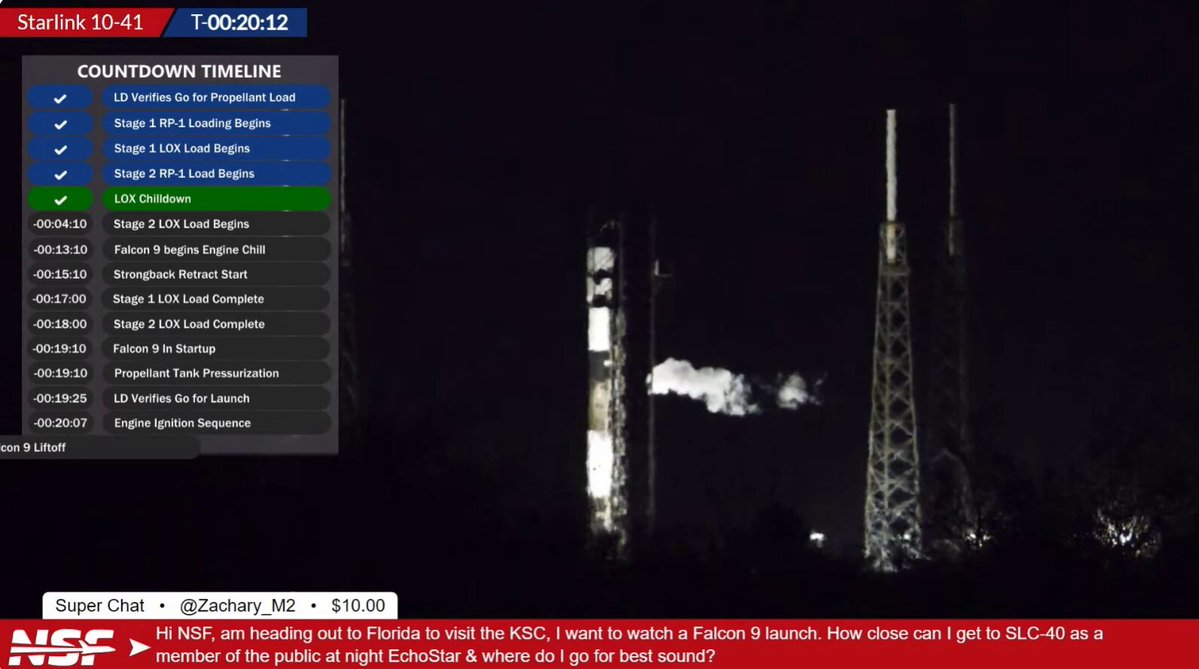
NASASpaceflight tracked the countdown closely, calling out the T-20 minute vent that signaled propellant loading was proceeding nominally. Then, just minutes later — liftoff.

SpaceX's official account confirmed the mission parameters — 29 Starlink satellites, Falcon 9, departing Florida — and the webcast link went live in the final minutes before launch.

The launch confirmation came from NASASpaceflight moments after ignition, with footage capturing the Falcon 9 clearing the pad cleanly.

🔭 The BASENOR Take
Timeline: Launch confirmed — March 2, 2026, ~2:57 AM UTC
Impact Level: 🟡 Moderate — Incremental expansion with long-term fleet-wide benefit
Confidence: ✅ High — Multiple confirmed sources including @SpaceX official account
What makes this mission quietly significant isn't the launch itself — SpaceX has made this look routine — it's the hardware aboard. The Starlink V2 Mini Optimized satellites carry improved phased-array antennas and more capable radios than the original V1 constellation, meaning each new bird added to the grid meaningfully increases the total bandwidth available to users, not just the geographic coverage footprint.
Booster B1078 completing its 26th flight is also worth noting. The reusability cadence that SpaceX has achieved — the same booster flying two dozen times with pinpoint droneship landings in the Atlantic — is the economic engine behind why Starlink can expand this aggressively. Without reuse, the cost per satellite in orbit would make this pace financially impossible.
📰 Deep Dive
For Tesla owners, the Starlink connection is more direct than it might appear. Tesla's Semi vehicles use Starlink for over-the-air connectivity in areas where cellular coverage is thin. Tesla's global Supercharger network increasingly relies on Starlink as a backhaul option for remote stations where running fiber or cellular infrastructure is impractical. And as Tesla's Full Self-Driving architecture evolves, the ability to push large model updates to vehicles in low-coverage regions becomes more dependent on a dense, high-throughput satellite mesh. Every Starlink launch is, in a meaningful sense, infrastructure investment for Tesla's broader ecosystem.
The choice of Space Launch Complex 40 at Cape Canaveral for this mission reflects SpaceX's operational tempo from Florida's Space Coast, which has become one of the busiest orbital launch corridors on the planet. SLC-40 and SLC-39A together allow SpaceX to sustain a launch cadence that no other operator currently matches. For context, missions like Starlink 10-41 are now so frequent that tracking organizations like NASASpaceflight cover them in real time as a matter of routine — a remarkable shift from just a few years ago when each Falcon 9 launch was a major standalone event.
With 29 more Starlink V2 Mini Optimized satellites now on their way to operational altitude, the constellation's capacity edge over any competing network continues to widen. For users in underserved regions — whether they're Tesla Semi operators on remote freight corridors, off-grid Powerwall owners, or simply rural internet customers — each mission like this one translates into a measurably better connection. That's the real payload here.
Sources & reporting notes
The links below identify the material source records used for this report.
- @NASASpaceflight on X (2026-03-02T02:57:43.000Z) — Direct source
- @NASASpaceflight on X (2026-03-02T02:37:17.000Z) — Direct source
- @NASASpaceflight on X (2026-03-02T02:23:55.000Z) — Direct source
- @SpaceX on X (2026-03-02T02:49:10.000Z) — Direct source
- @NASASpaceflight on X (2026-03-04T10:59:55.000Z) — Direct source
- @NASASpaceflight on X (2026-03-04T10:58:51.000Z) — Direct source
- @NASASpaceflight on X (2026-03-04T10:57:14.000Z) — Direct source
- @NASASpaceflight on X (2026-03-04T10:53:35.000Z) — Direct source
- @NASASpaceflight on X (2026-03-04T10:00:52.000Z) — Direct source
- @SpaceX on X (2026-03-04T10:44:39.000Z) — Direct source
Source links are preserved as published or accessed. See our editorial standards and corrections policy.
The BASENOR Editorial Desk covers Tesla, SpaceX, and related technology, curating reporting from primary sources — official accounts, regulatory filings, and software release data. Every article passes source-record and fact-checking review before publication. About the newsroom.
This report was curated by the BASENOR Editorial Desk from the sources listed above. Read our editorial standards or email editorial@basenor.com to report an error.