SpaceX Starlink 6-110 Launches Successfully — Falcon 9 Booster B1092 Completes Its 10th Landing
30-Second Brief
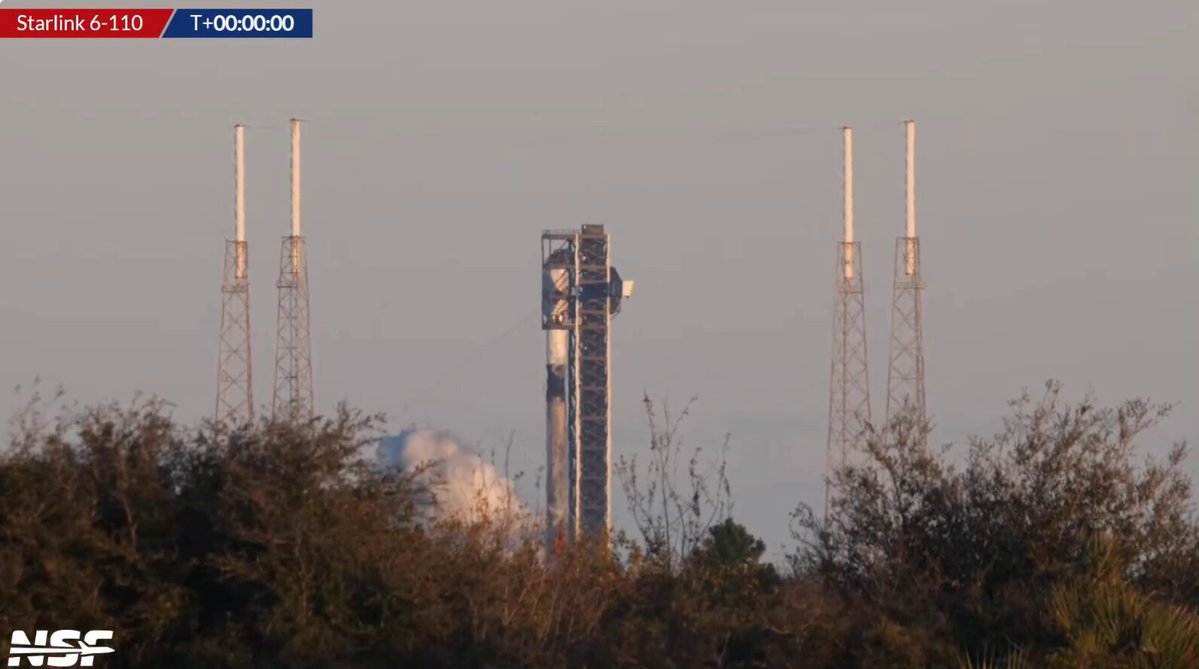
The News: SpaceX successfully launched the Starlink 6-110 mission from SLC-40 at Cape Canaveral on February 24, 2026, deploying 29 Starlink v2.0 Mini satellites into low Earth orbit aboard Falcon 9 booster B1092-10 — which then completed a picture-perfect 10th landing on the drone ship Just Read the Instructions.
Why It Matters: Every successful Starlink launch adds capacity and redundancy to the constellation that powers Tesla's in-car connectivity and the broader SpaceX commercial internet business. A booster completing 10 flights is a testament to Falcon 9's unmatched reusability cadence.
Source: @NASASpaceflight on X

📊 Key Figures
| Metric | Detail | Context |
|---|---|---|
| Launch Time | Feb 24, 2026 — 23:04 UTC | 3:04 PM PST / 6:04 PM EST |
| Launch Site | SLC-40, Cape Canaveral SFS | Florida, USA |
| Booster | B1092-10 | 10th flight and 10th successful landing |
| Landing Zone | JRTI (Just Read the Instructions) | Autonomous drone ship, Atlantic Ocean |
| Satellites Deployed | 29 Starlink v2.0 Mini (F9-2 Optimized) | Low Earth Orbit (LEO) |
| Rocket | Falcon 9 Block 5 | Most flown orbital rocket in history |
The Launch: Clean Liftoff, Flawless Recovery
At 23:04 UTC on February 24, 2026, Falcon 9 booster B1092-10 lit up the Florida sky from Space Launch Complex 40 at Cape Canaveral Space Force Station. The mission — designated Starlink 6-110 — carried 29 Starlink v2.0 Mini satellites to low Earth orbit in what has become SpaceX's most routine, yet most consequential, operation: expanding the Starlink megaconstellation.
Within minutes of liftoff, the first stage separated and began its controlled descent toward the Atlantic Ocean, where the autonomous spaceport drone ship Just Read the Instructions (JRTI) was stationed and waiting. The result? A textbook touchdown — B1092's 10th successful landing in 10 attempts, a perfect record that underscores just how far rocket reusability has come.

🔭 The BASENOR Take
Timeline
Nominal — On Schedule
Impact Level
High — Constellation Growth
Confidence
✅ Confirmed — Mission Success
A 10-flight booster is no longer a milestone to gawk at — it is SpaceX's operational standard, and that normalization is exactly what makes this significant. Each reuse of a booster like B1092 cuts the cost of getting satellites to orbit, which directly accelerates the pace at which SpaceX can scale Starlink's capacity and geographic reach.
The v2.0 Mini satellites deployed on this mission carry meaningfully more throughput per unit than earlier generations, meaning each successful launch like Starlink 6-110 contributes disproportionately to overall network performance. For Tesla owners who rely on Starlink-adjacent connectivity infrastructure — or who are watching SpaceX's commercial momentum as a proxy for the broader Musk ecosystem — missions like this are the quiet engine behind it all.
📰 Deep Dive
Booster B1092 has now flown 10 times without a single failure — a remarkable record for any piece of aerospace hardware, let alone one that endures the thermal and mechanical stresses of orbital-class ascent and a supersonic retropropulsion landing. SpaceX has pushed select boosters past 20 flights, but the 10-flight mark remains a meaningful operational benchmark, representing the point at which a booster's per-launch amortized cost drops to a small fraction of what an expendable rocket would cost.
The choice of Just Read the Instructions as the recovery vessel for this mission reflects the Atlantic-side cadence that SLC-40 operations typically demand. JRTI has been a workhorse in SpaceX's drone ship fleet, and its consistent deployment keeps the turnaround pipeline moving — a refurbished booster back at the Cape is a booster that can fly again in weeks, not months.
The Starlink v2.0 Mini variant, which these 29 satellites belong to, represents an important middle ground in SpaceX's satellite evolution. Designed to fit on Falcon 9 (as opposed to requiring Starship's larger payload volume), these optimized units deliver substantially improved capacity over the original v1.5 design while remaining compatible with SpaceX's proven and proven-again workhorse rocket. As SpaceX continues to grow the constellation, missions in the Group 6 shell fill in geographic and orbital coverage gaps that improve service quality for existing subscribers.
For the Tesla ecosystem specifically, Starlink's operational reliability and growth matter in ways that go beyond internet service. Tesla's own vehicle connectivity, future autonomous fleet data pipelines, and the shared corporate momentum between Tesla and SpaceX are all, in some measure, downstream of missions like Starlink 6-110 going exactly as planned. Today, they did.
Sources & reporting notes
The links below identify the material source records used for this report.
- @NASASpaceflight on X (2026-02-24T23:13:49.000Z) — Direct source
- @NASASpaceflight on X (2026-02-24T23:05:19.000Z) — Direct source
Source links are preserved as published or accessed. See our editorial standards and corrections policy.
The BASENOR Editorial Desk covers Tesla, SpaceX, and related technology, curating reporting from primary sources — official accounts, regulatory filings, and software release data. Every article passes source-record and fact-checking review before publication. About the newsroom.
This report was curated by the BASENOR Editorial Desk from the sources listed above. Read our editorial standards or email editorial@basenor.com to report an error.