SpaceX is going for something it has only pulled off once before: three orbital missions in a single day. On October 1, 2026, the company is targeting a "Triple Header Thursday" — three Falcon 9 launches across two coasts in less than 13 hours, weather permitting. If it comes together, it will stand as one of the clearest demonstrations yet of just how industrialized American launch operations have become.

The Three Missions
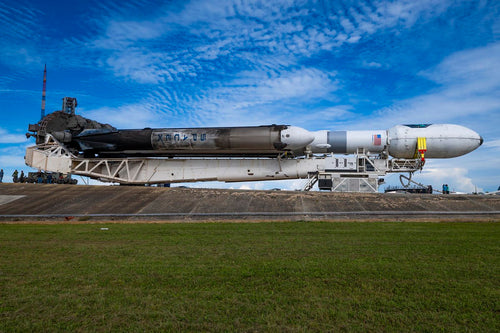
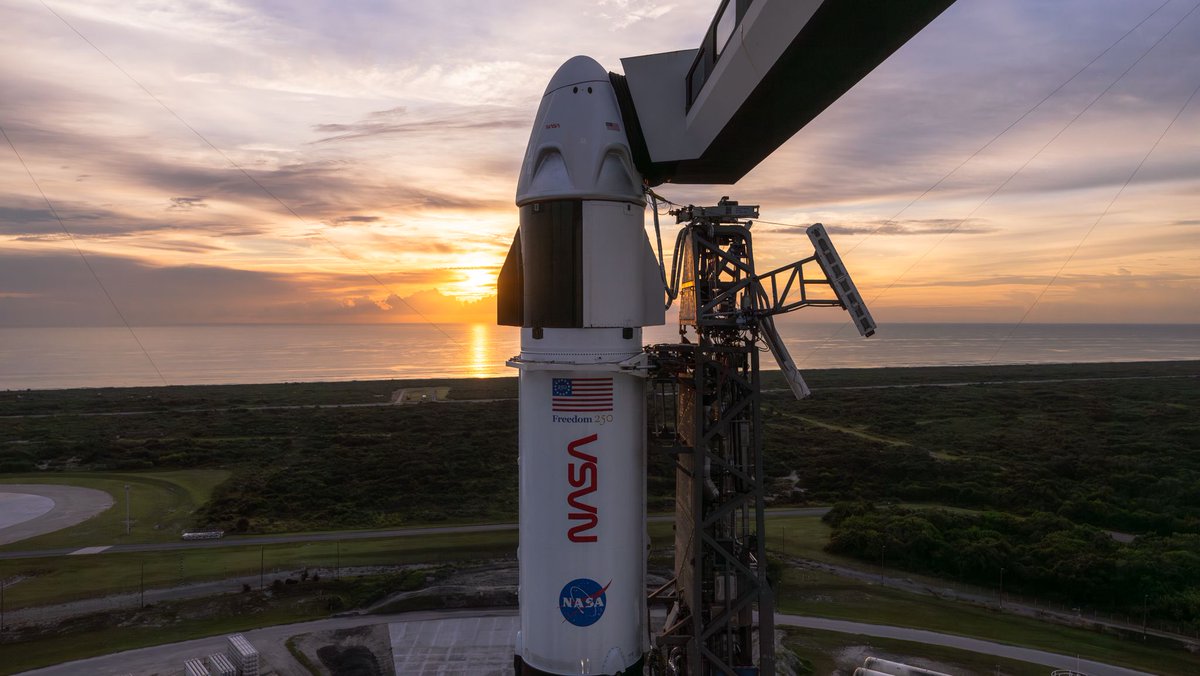
The day opens with Crew-13, lifting off from Cape Canaveral Space Force Station in Florida at 11:10 a.m. ET, carrying astronauts to the International Space Station. Just eight minutes later — at 11:18 a.m. local time — Transporter 18 is scheduled to launch from Vandenberg Space Force Base in California, a rideshare mission carrying dozens of small satellites to orbit. The day closes with NROL-97, a national security payload launching from Kennedy Space Center.
Two Falcon 9 boosters and a third vehicle (noted in the original announcement as involving a different rocket variant) are required to pull this off simultaneously across opposite ends of the country. The logistics alone — range safety, booster turnaround, launch control handoffs — make a coordinated three-launch day genuinely complex.

This Has Happened Before — Once
SpaceX completed a three-mission day in under 13 hours for the first time on March 15, 2025, when Crew-10, a Starlink batch, and a third mission all flew within that window. That day was treated as a landmark moment for launch cadence. The fact that SpaceX is now attempting to repeat it — with a crewed ISS mission, a commercial rideshare, and a classified government payload — suggests the operational model has matured enough to treat it as repeatable rather than exceptional.
For context on scale: in all of 2013, SpaceX flew two missions total. The company is now structuring single days around three-launch windows.
Why Cadence Is the Real Story
Each of these missions serves a different customer segment — NASA human spaceflight, commercial smallsat operators, and the U.S. intelligence community — which means SpaceX is simultaneously managing three distinct mission assurance chains, three sets of customer requirements, and two launch sites under the same 13-hour clock. That operational breadth is harder to replicate than the rocket hardware itself.
Rapid reusability is the engine underneath all of this. Falcon 9 boosters have now demonstrated the ability to fly, land, and return to the pad on timelines that would have been implausible for expendable vehicles. Without booster reuse, a three-launch day at this pace simply isn't economically viable.
All three missions remain subject to weather holds, and any single scrub would break the window. But the ambition of even scheduling this day says something about where SpaceX's operational confidence currently sits. For our full SpaceX coverage, including previous cadence milestones, check the archive.
Sources & reporting notes
The links below identify the material source records used for this report.
- @LabPadre on X (2026-09-30T19:36:11.000Z) — Direct source
Source links are preserved as published or accessed. See our editorial standards and corrections policy.
The BASENOR Editorial Desk covers Tesla, SpaceX, and related technology, curating reporting from primary sources — official accounts, regulatory filings, and software release data. Every article passes source-record and fact-checking review before publication. About the newsroom.
This report was curated by the BASENOR Editorial Desk from the sources listed above. Read our editorial standards or email editorial@basenor.com to report an error.