SpaceX isn't just putting cell towers in space anymore — it's eyeing the ones on the ground too. A combination of fresh spectrum acquisitions, confirmed infrastructure plans, and a growing Direct-to-Cell satellite fleet signals that Starlink is making a serious push to become a full-stack mobile carrier. Here's what's actually happening, by the numbers.

1. SpaceX Just Locked In a Nationwide 800 MHz Portfolio
On October 8, 2026, SpaceX announced an agreement to acquire a nationwide portfolio of low-band 800 MHz spectrum licenses from Grain Management for approximately $8 billion, pending FCC approval. Low-band spectrum is the workhorse of mobile networks — it travels farther and punches through walls better than higher frequencies. For a hybrid satellite-terrestrial network, this is foundational. Without it, indoor coverage would be the Achilles heel of any Starlink mobile offering.
2. The FCC Already Approved a Second Spectrum Deal — This Week
The same day @wholemars posted his observation, October 22, 2026, the FCC approved SpaceX's acquisition of three spectrum licenses in the 1695–1710 MHz band from Tristar, covering 15 MHz of capacity. Crucially, the FCC also granted waivers allowing SpaceX to use this spectrum for satellite communications rather than traditional terrestrial cell towers — a regulatory signal that the agency is willing to accommodate SpaceX's hybrid architecture. This follows SpaceX's earlier 2 GHz spectrum acquisition from EchoStar in 2025.
3. Gwynne Shotwell Confirmed the Tower Strategy Directly
This isn't speculation. SpaceX President Gwynne Shotwell stated on October 21, 2026 — one day before the @wholemars post — that the company "definitely intend[s] to build out terrestrial components," specifically including antennas on towers and rooftops. The satellite network provides the backbone; terrestrial infrastructure fills the gaps, particularly in dense urban environments where satellite geometry alone creates coverage shadows. The key insight from @wholemars is that SpaceX needs far less of this ground infrastructure than a conventional carrier, because the satellites handle what towers can't reach.
4. Over 400 Direct-to-Cell Satellites Are Already Flying
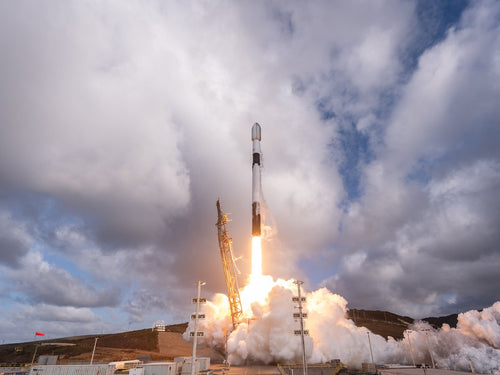
SpaceX has launched more than 400 Direct-to-Cell-equipped satellites, orbiting between 540 km and 570 km altitude. These function as cell towers in space, connecting directly to standard mobile handsets without any special hardware. The service launched commercially in the United States in partnership with T-Mobile after receiving FCC approval in November 2024, and in New Zealand with One NZ. SpaceX holds FCC authorization to operate up to 15,000 Starlink Mobile satellites — meaning the current constellation is a fraction of the eventual buildout.
5. The Efficiency Argument Is the Whole Thesis
Traditional carriers need dense tower grids because their networks have no fallback when a tower goes dark or a region lacks coverage. SpaceX's architecture inverts this: the satellite layer provides ubiquitous baseline coverage globally, and terrestrial nodes layer on top to boost capacity and indoor penetration in high-demand areas. The result, in theory, is a carrier that can match coverage footprints with a fraction of the ground infrastructure investment. Whether that translates into competitive pricing or faster rural rollout remains to be seen — but the spectrum acquisitions suggest SpaceX is moving from theory to execution faster than most expected.

Three spectrum deals in under two years, a confirmed terrestrial buildout plan from the company president, and 400-plus satellites already in orbit — SpaceX isn't testing the waters on mobile. The $8 billion Grain Management deal alone signals this is a long-term infrastructure commitment. The FCC approval timeline on that 800 MHz acquisition will be the next milestone worth watching. For our SpaceX coverage, that's the regulatory domino that determines how quickly this hybrid network can go live at scale.
Sources & reporting notes
The links below identify the material source records used for this report.
- @wholemars on X (2026-10-22T21:50:31.000Z) — Direct source
Source links are preserved as published or accessed. See our editorial standards and corrections policy.
The BASENOR Editorial Desk covers Tesla, SpaceX, and related technology, curating reporting from primary sources — official accounts, regulatory filings, and software release data. Every article passes source-record and fact-checking review before publication. About the newsroom.
This report was curated by the BASENOR Editorial Desk from the sources listed above. Read our editorial standards or email editorial@basenor.com to report an error.