SpaceX's lead in the global launch market isn't just large — it's compounding. On September 16, Ars Technica's Eric Berger laid out a sharp-eyed assessment of where the industry stands: Chinese private companies are reverse-engineering Raptor 3, Europe is doubling down on solid rockets, and Falcon 9's competitors spent a decade dismissing it while it quietly became the backbone of orbital access. The gap is widening, not closing.
1. Falcon 9 Now Delivers 85–90% of All Payload Mass to Orbit
The raw market share numbers are striking. According to background research, the Falcon family — Falcon 9 and Falcon Heavy — delivers approximately 85% to 90% of all payload mass launched to orbit worldwide as of late August 2026. By launch count, SpaceX held over 60% of the commercial market in 2025; by March 2026, that figure had grown to roughly 82%. In 2025 alone, SpaceX completed 165 successful orbital missions — one every 2.2 days on average. The company is on pace for 140 to 145 Falcon 9 launches in 2026, having already hit its 100th flight for the year by August 25.
2. The CEO Who Called Falcon 9 a "Tata" Car Watched His Rocket Fail Repeatedly
Berger's sharpest point came with historical receipts. The CEO of Avio — the Italian company behind the Vega rocket — publicly compared Falcon 9 to a "Tata" car roughly a decade ago, citing reliability concerns. What followed: Vega suffered multiple failures while Falcon 9 went on to launch more than 150 times a year. As of September 13, 2026, Falcon 9 has a 99.5% mission success rate across 687 total flights, with 684 successful payload deliveries. Individual boosters have now flown as many as 37 times, and SpaceX is working to certify them for up to 40 flights.

3. China's Space Pioneer Is Building a Near-Identical Copy of Raptor 3
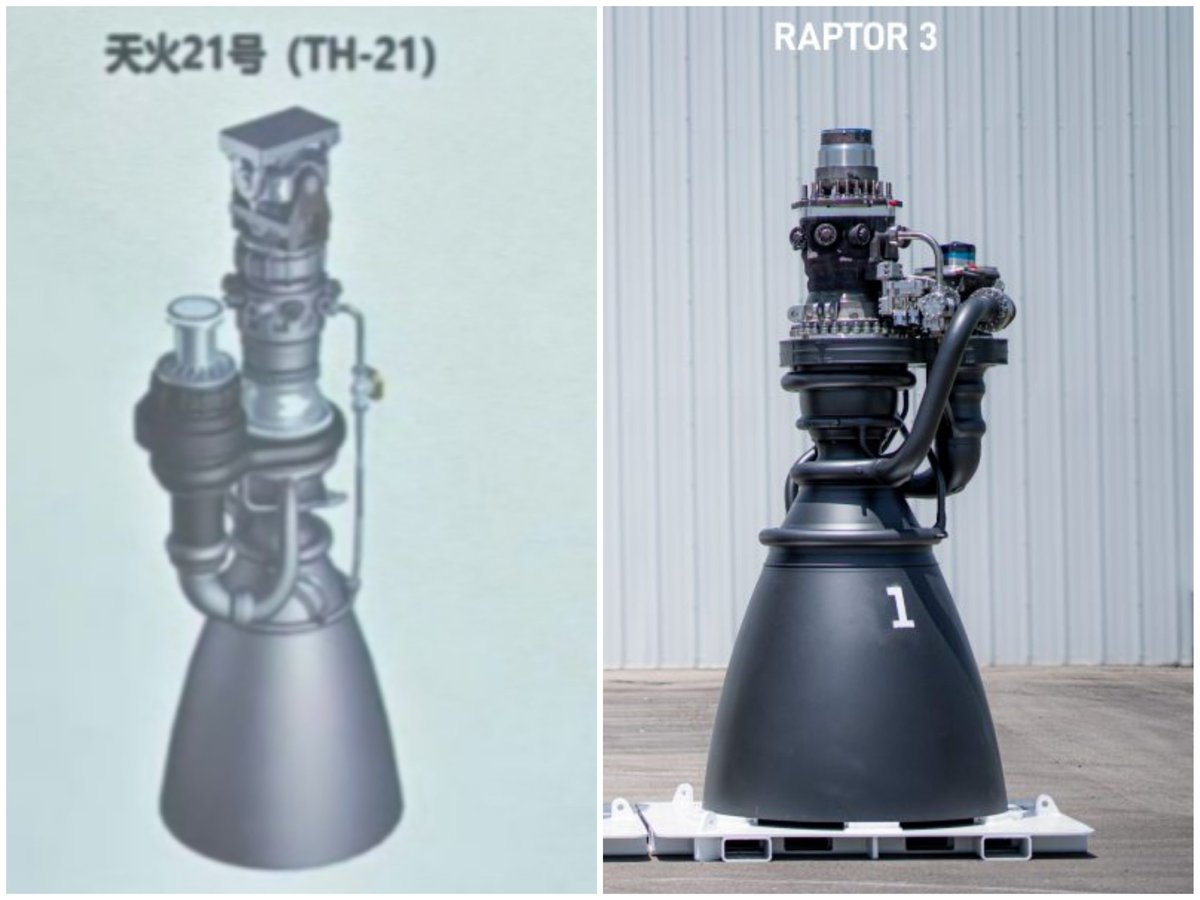
The most concrete signal of SpaceX's technological lead is who's trying to replicate it. Berger flagged that Space Pioneer — a Chinese private launch company that has raised nearly $1 billion — is developing an engine with virtually identical thrust to the Raptor 3: 2,450 kN. For context, SpaceX's Raptor 3 sea-level variant produces approximately 2,452 kN (250 metric tons-force). The architecture mirrors Raptor 3's design as well. Imitation at this level of specificity is a form of validation: it tells you which engine the industry has decided is the one to beat.

4. Raptor 3 Is Already in a Different Engineering League
What Space Pioneer is chasing is a moving target. The Raptor 3, first revealed in August 2024, eliminated the need for external heat shields and fire suppression systems by integrating sensors and controllers directly into the engine. Its dry mass dropped to 1,525 kg from the previous generation's 1,630 kg, while thrust increased. Testing has pushed chamber pressure to 350 bar — among the highest ever achieved in a production-oriented rocket engine. By April 2026, SpaceX had produced over 600 Raptor engines total and logged more than 40,000 seconds of Raptor 3 runtime in testing. Chinese engineers are targeting the published specs of an engine that SpaceX is still actively improving.
5. Europe's Solid-Rocket Bet Is the Wrong Answer to the Right Problem
Berger's most pointed critique was directed at Europe's strategic response to Falcon 9's dominance. Rather than investing in rapid reusability — the architecture that made Falcon 9 what it is — European agencies have been directing contracts toward Avio's Vega-C, a solid-propellant rocket with no reuse capability. Berger's argument: what's coming next from SpaceX (read: Starship at scale) will be an even larger competitive gap than Falcon 9 created. Betting on expendable solid rockets in 2026 isn't a bridge strategy — it's a dead end. The window for Europe to build a competitive reusable launch capability is narrowing, not widening.
The through-line across all five points is the same: SpaceX's lead is structural, not circumstantial. Competitors dismissed Falcon 9 for years while it accumulated the reliability record and reuse data that now make it nearly impossible to undercut on price or schedule. The companies that are taking SpaceX seriously — like Space Pioneer — are at least asking the right questions. The ones that aren't are building rockets that will be obsolete before they're competitive. Whether China can close the gap on Raptor 3 before Starship changes the economics again is the real race to watch. For more on SpaceX's trajectory, see our SpaceX coverage.
Sources & reporting notes
The links below identify the material source records used for this report.
- @SciGuySpace on X (2026-09-16T16:14:26.000Z) — Direct source
- @SciGuySpace on X (2026-09-16T16:23:56.000Z) — Direct source
- @SciGuySpace on X (2026-09-16T16:26:59.000Z) — Direct source
Source links are preserved as published or accessed. See our editorial standards and corrections policy.
The BASENOR Editorial Desk covers Tesla, SpaceX, and related technology, curating reporting from primary sources — official accounts, regulatory filings, and software release data. Every article passes source-record and fact-checking review before publication. About the newsroom.
This report was curated by the BASENOR Editorial Desk from the sources listed above. Read our editorial standards or email editorial@basenor.com to report an error.