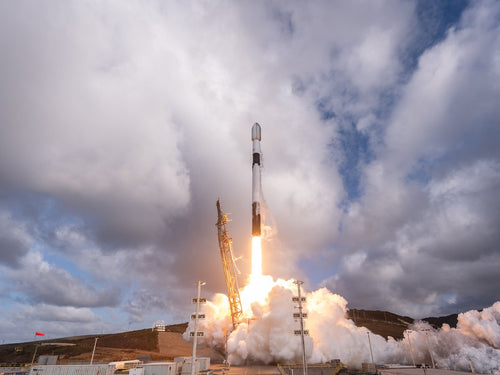
Elon Musk confirmed Starlink's presence in Bolivia on October 24, 2026, sharing footage of the service reaching the country. But the story behind that post is bigger than a single tweet — Bolivia has quietly become one of SpaceX's more structured South American rollouts, combining commercial service with a government-backed education program that could bring satellite internet to thousands of rural classrooms.

How Bolivia Got Here
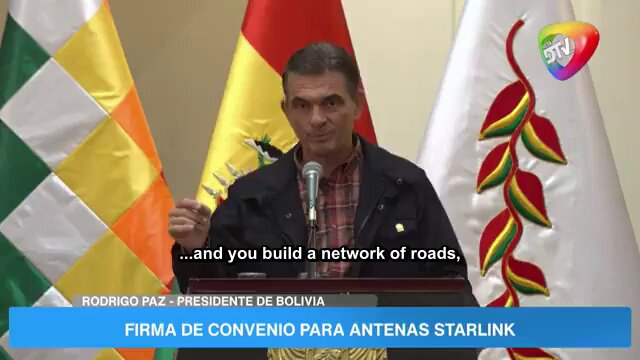
The legal groundwork was laid on December 22, 2025, when Bolivian President Rodrigo Paz signed Supreme Decree 5509, authorizing global satellite internet providers — Starlink included — to operate commercially within the country. The commercial service launched on February 2, 2026, making Bolivia one of the earlier South American markets to formally authorize and activate the network.
Adoption moved quickly. According to starlinkinsider.com, by mid-May 2026 — roughly three months after launch — Starlink had accumulated approximately 40,000 active connections in Bolivia. For a country where large portions of the population live outside the reach of fiber or reliable LTE, that uptake rate reflects genuine demand rather than novelty.
Residential pricing starts at BOB 460 per month, with download speeds ranging from 135 to 310 Mbps according to published figures. That speed range puts Starlink well above what most rural Bolivians have had access to historically.
The School Program Is the Real Story
The commercial rollout is notable, but Bolivia's government-backed "Aula Conectada" (Connected Classroom) program is what distinguishes this expansion from a standard market entry. The initiative aims to install Starlink antennas at public schools across rural and semi-urban areas nationwide — with a stated target of more than 5,000 installations.
As of early June 2026, the program had connected over 1,000 students and teachers across 14 schools, according to reporting from latintimes.com. The pace accelerated in October: on October 20, 2026 — just four days before Musk's post — President Paz signed agreements with all 85 municipalities in the La Paz department, marking the first formal deployment phase of Aula Conectada.
The structure of the program is worth noting. Schools receive installation and 24 months of free service; municipalities are expected to cover recurring costs after that period. State-owned telecom operator Entel is handling technical installation and is in negotiations to become an official Starlink reseller — a detail that signals Bolivia is treating this as infrastructure, not a pilot.
The government's stated goal is nationwide school coverage by the end of 2026. Whether that timeline holds will depend on Entel's installation capacity and municipal budget commitments, but the October 20 La Paz signing suggests the program is moving beyond planning into execution.
Where Bolivia Fits in the Broader SpaceX Picture
Bolivia's rollout follows a pattern SpaceX has refined across other emerging markets: secure regulatory authorization, launch commercial service, then layer in government partnerships that accelerate adoption and create institutional anchors for the network. The education angle — connecting rural schools — also provides a politically durable justification for the service that tends to outlast changes in administration.
For SpaceX, Bolivia represents another data point in the argument that low-Earth orbit satellite internet is viable infrastructure for countries where terrestrial broadband buildout is economically difficult. Forty thousand connections in three months, followed by a formal municipal agreement covering an entire department, is a meaningful signal — not just a vanity metric.
Musk's October 24 post, brief as it was, came four days after the La Paz municipal signing. The timing suggests the tweet was at least partly a nod to that milestone, even if it didn't spell it out. For SpaceX coverage, see our SpaceX coverage for the broader constellation story.
Sources & reporting notes
The links below identify the material source records used for this report.
- @elonmusk on X (2026-10-24T18:43:16.000Z) — Direct source
Source links are preserved as published or accessed. See our editorial standards and corrections policy.
The BASENOR Editorial Desk covers Tesla, SpaceX, and related technology, curating reporting from primary sources — official accounts, regulatory filings, and software release data. Every article passes source-record and fact-checking review before publication. About the newsroom.
This report was curated by the BASENOR Editorial Desk from the sources listed above. Read our editorial standards or email editorial@basenor.com to report an error.