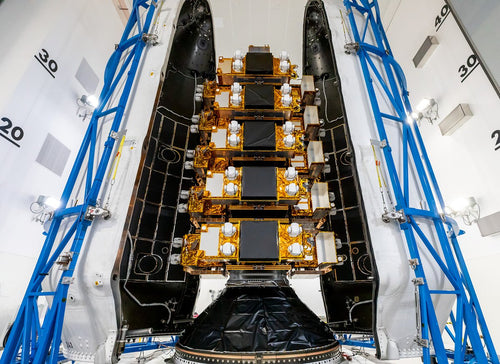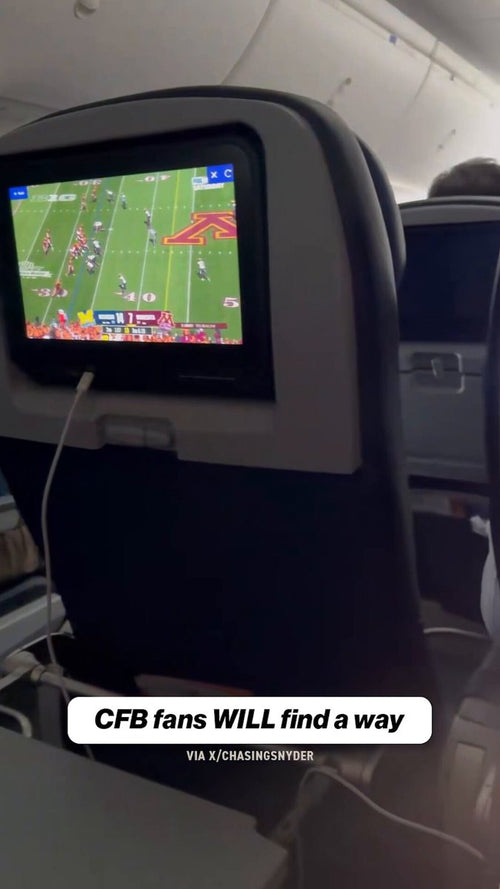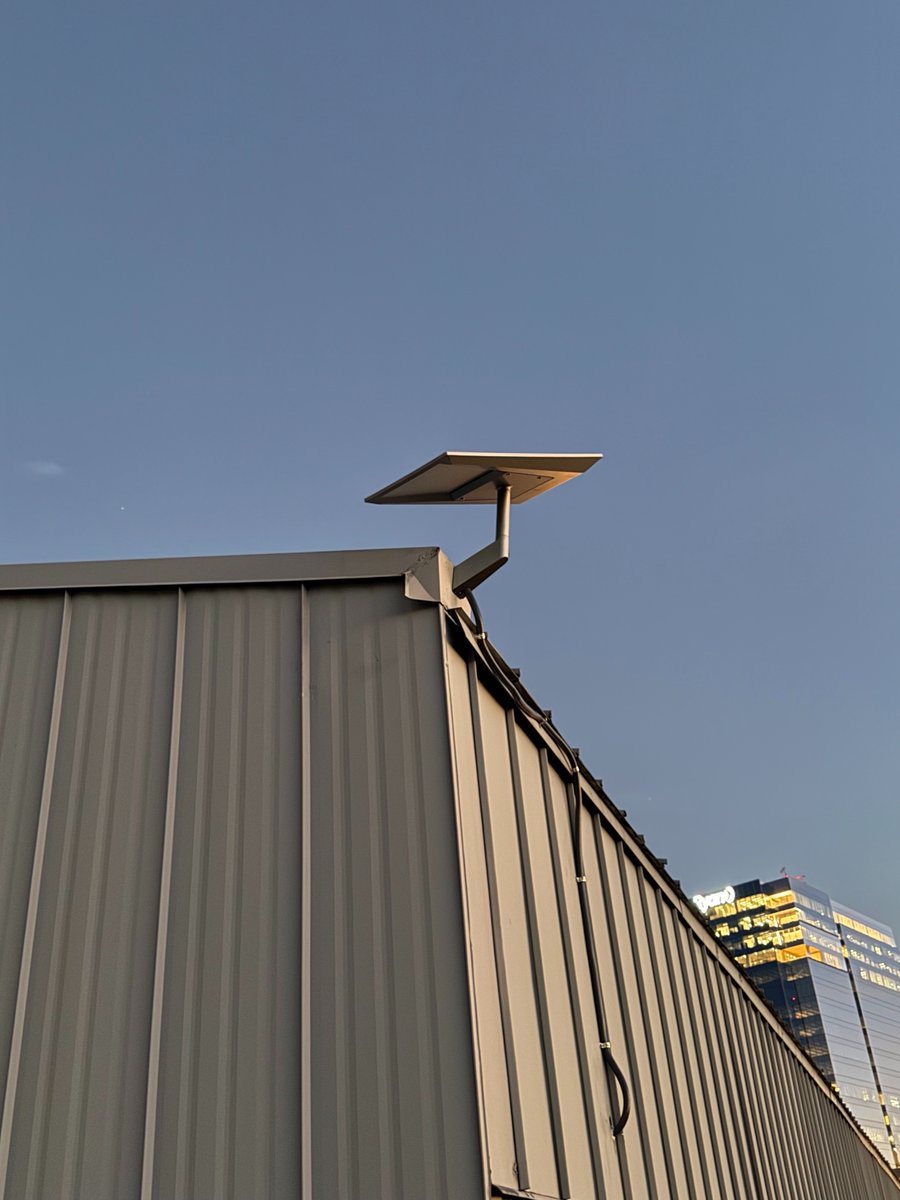
On the same August afternoon, Starlink announced two contracts that illustrate just how broadly the satellite network is embedding itself into everyday commerce and travel. Iberia used Starlink to stream a total solar eclipse from 33,000 feet, while AutoNation — one of the largest automotive retail groups in the United States — confirmed it is running sales transactions, service operations, and customer communications over the network. Taken together, the announcements signal that Starlink has moved well past the 'remote backup connection' phase and into mission-critical infrastructure territory.
The Iberia Eclipse Flight
Iberia Flight IB1473, an Airbus A321XLR departing Madrid, carried scientists from the Shelios project on a special mission to observe and livestream the August 12 total solar eclipse from altitude — a vantage point that eliminates atmospheric interference and cloud cover. Starlink provided the high-speed in-flight connectivity that made the real-time broadcast possible.

The eclipse flight is not a one-off stunt. According to simpleflying.com, Iberia is in the process of rolling out Starlink across its full fleet. The airline joins a growing roster of carriers that have committed to the network: over 40 airlines have announced strategic partnerships with Starlink, and more than 1,400 commercial aircraft globally were already equipped as of mid-2026, according to industry reporting. United Airlines is targeting over 1,000 planes by end of 2026 — a full year ahead of its original schedule. The Lufthansa Group is set to begin its own rollout on August 19, covering more than 850 aircraft across ten carriers, with full fleet coverage targeted by 2029.
AutoNation: Enterprise Connectivity at Scale
The AutoNation partnership is a different kind of signal. Automotive dealerships are operationally demanding environments — point-of-sale systems, financing platforms, service bay diagnostics, and customer-facing Wi-Fi all running simultaneously. The fact that a group of AutoNation's scale is routing that traffic through Starlink suggests the network's latency and reliability have crossed a threshold that enterprise IT teams are willing to stake revenue-generating operations on.
Starlink did not disclose the number of AutoNation locations covered, but AutoNation operates hundreds of dealerships across the United States, making this one of the more substantial enterprise deployments the network has publicly acknowledged.
Pricing Context
The commercial expansion comes alongside a significant pricing reset for business customers. Effective July 8, 2026, SpaceX doubled the cost of its Aviation Global Unlimited plan from $10,000 to $20,000 per month, offering up to 1 Gbps download speeds with unlimited worldwide data. A new Aviation Regional Unlimited tier was introduced at $12,500 per month, capped at 500 Mbps within a single continental region. The price increases did not appear to slow airline adoption — if anything, the pipeline of new airline commitments has accelerated in the weeks since.
| Plan | Monthly Cost | Max Speed | Coverage |
|---|---|---|---|
| Aviation Global Unlimited | $20,000 | 1 Gbps | Worldwide |
| Aviation Regional Unlimited | $12,500 | 500 Mbps | Single region |
What the Pattern Tells Us
Aviation and automotive retail are not obvious bedfellows, but they share a common thread: both are environments where connectivity has historically been unreliable, expensive, or both. Airlines have spent years offering slow, overpriced cabin Wi-Fi through legacy satellite providers. Dealerships in suburban or rural locations often rely on cable infrastructure that was never designed for the data loads modern automotive software demands.
Starlink's value proposition in both cases is the same — consistent, high-throughput connectivity that does not depend on ground-based infrastructure. The eclipse livestream is the headline-grabbing proof point. The AutoNation deployment is arguably the more commercially significant one: it suggests Starlink is winning enterprise contracts not on novelty but on operational merit. For our full SpaceX coverage, see SpaceX coverage.
With Lufthansa's first Starlink-equipped commercial flight less than a week away and airline adoption accelerating across three continents, the question is no longer whether Starlink can handle aviation-scale demand — it is how quickly legacy in-flight connectivity providers can respond before their remaining contracts expire.
Sources & reporting notes
The links below identify the material source records used for this report.
- @Starlink on X (2026-08-12T17:01:36.000Z) — Direct source
- @Starlink on X (2026-08-12T17:50:50.000Z) — Direct source
Source links are preserved as published or accessed. See our editorial standards and corrections policy.
The BASENOR Editorial Desk covers Tesla, SpaceX, and related technology, curating reporting from primary sources — official accounts, regulatory filings, and software release data. Every article passes source-record and fact-checking review before publication. About the newsroom.
This report was curated by the BASENOR Editorial Desk from the sources listed above. Read our editorial standards or email editorial@basenor.com to report an error.