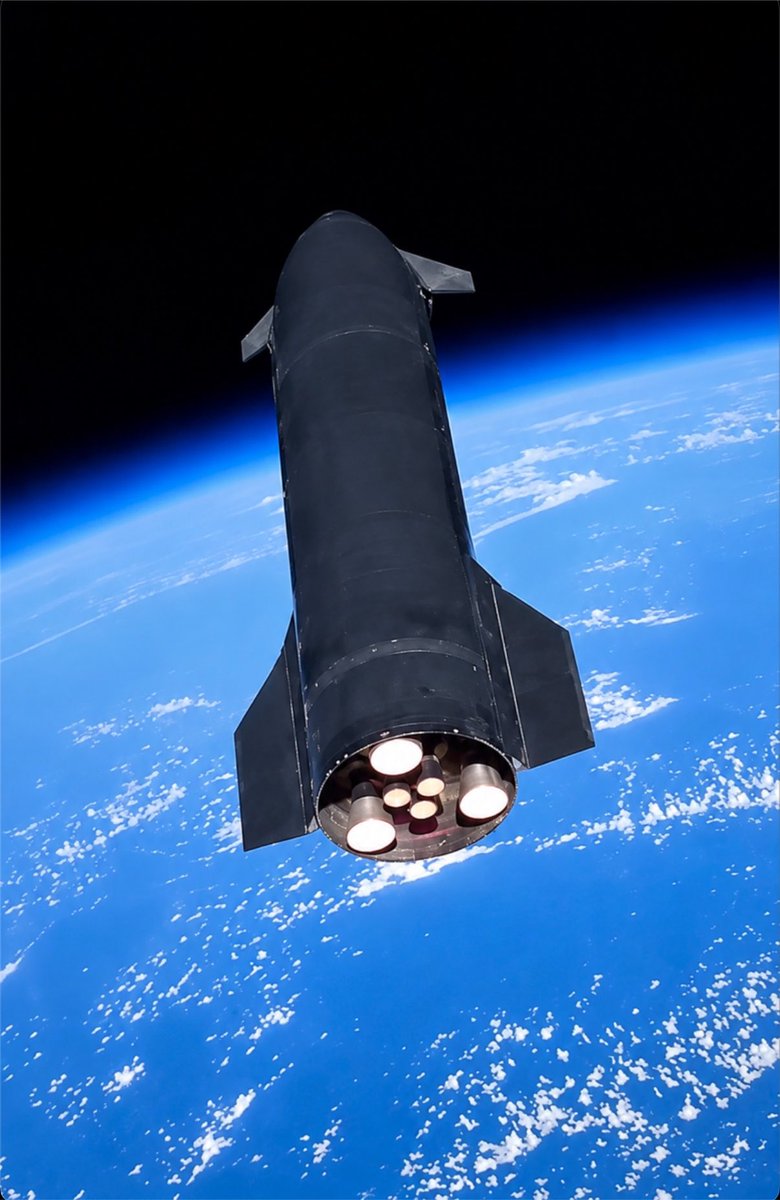
Less than 24 hours after Starship Flight 13 lifted off from Boca Chica, Elon Musk posted something that stopped the space community mid-scroll: a real photograph of Starship in flight, captured not by a ground camera or chase plane, but by the very Starlink satellites it had just deployed. It's the kind of image that makes the scale of what SpaceX has built suddenly click into place.

What Happened on Flight 13
Starship's 13th test flight launched on July 24, 2026, at 6:51 p.m. EDT from SpaceX's Starbase facility in South Texas. According to Space.com, this was the second flight of the new Version 3 (V3) Starship design — a significant generational step from the vehicles that flew the earlier test campaigns.
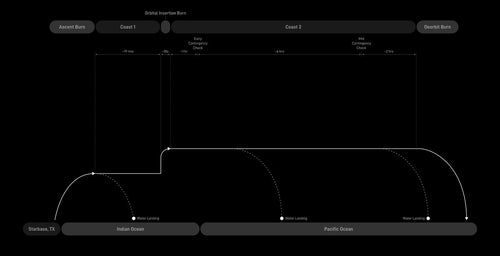
The mission's primary payload was 20 next-generation Starlink V3 satellites, described by SpaceX as the most advanced Starlinks built to date. They were deployed at an altitude of approximately 124 miles (200 kilometers) on a suborbital trajectory — meaning the satellites were not intended to reach stable orbit. By design, they burned up on reentry after completing their mission objectives. That mission objective, it turns out, included pointing cameras back at the rocket that carried them.
According to reporting from Space.com, two of the Starlink V3 satellites activated onboard lights and turned their sensors toward Starship as they separated, capturing imagery in the moments after deployment before drifting off into orbital darkness. The photo Musk shared on X is the output of that sequence — Starship, framed against the black of space, photographed by its own cargo.

Why the Starlink-Photographs-Starship Moment Matters
The image is striking on its own. But the deeper story is what it represents operationally: SpaceX's two flagship programs are now directly instrumenting each other. Starship carried Starlink. Starlink documented Starship. That feedback loop — where one system improves the data quality and public visibility of the other — is a compounding advantage that few aerospace programs have ever had.
The Starlink V3 satellites deployed on Flight 13 were never going to survive reentry. They were test articles, flying a suborbital profile specifically to validate how the new generation of satellites behaves in the deployment environment Starship creates. The fact that SpaceX also used them to capture external imagery of the vehicle in flight suggests the company is squeezing every possible data point out of each mission — a hallmark of the iterative development philosophy that has defined Starship's entire test campaign.
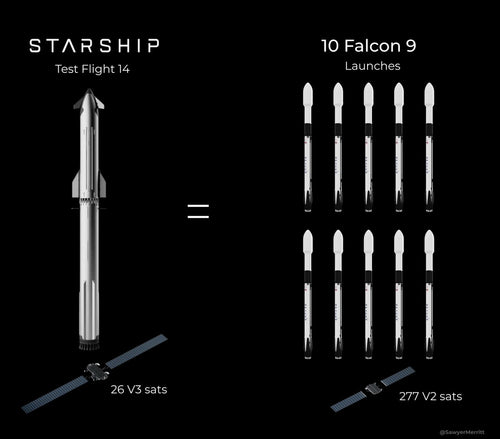
For the Starlink program specifically, V3 represents a meaningful capability jump. The satellites are larger and more capable than the V2 Mini units that have been filling out the constellation, and Starship's payload volume is the only fairing large enough to fly them at scale. Every Starship flight that works is, in a direct sense, a Starlink infrastructure flight.
Flight 13 in the Context of the V3 Campaign
Flight 13 being the second V3 Starship test flight is worth pausing on. The original Starship design went through twelve flights before SpaceX considered the architecture mature enough to introduce a new version. V3 brings structural and system-level changes that the company has not fully detailed publicly, but the rapid progression from Flight 12 to Flight 13 — and the decision to fly operational Starlink hardware on only the second V3 mission — signals confidence in the new design's reliability.
SpaceX's own video post, framing the launch as "the sights and sounds of launching the world's most powerful rocket," leans into the spectacle of a vehicle that still commands attention even after more than a year of test flights. The Starbase launch environment — the sound, the light, the sheer scale of a 400-foot vehicle clearing the pad — remains genuinely unlike anything else flying today.
What Flight 13 adds to that narrative is a closing of the loop: Starship is no longer just a vehicle being tested in isolation. It is becoming infrastructure, and Starlink is becoming one of the instruments that monitors it. The next question is how quickly V3 Starlink satellites transition from suborbital test articles to operational constellation members — and whether Starship's cadence can keep pace with the demand.
🚀 Following the Starship program? See every test flight, official outcome and the next launch window in our SpaceX Starship Tracker.
Sources & reporting notes
The links below identify the material source records used for this report.
- @elonmusk on X (2026-07-25T19:22:11.000Z) — Direct source
- @SpaceX on X (2026-07-25T19:43:41.000Z) — Direct source
Source links are preserved as published or accessed. See our editorial standards and corrections policy.
The BASENOR Editorial Desk covers Tesla, SpaceX, and related technology, curating reporting from primary sources — official accounts, regulatory filings, and software release data. Every article passes source-record and fact-checking review before publication. About the newsroom.
This report was curated by the BASENOR Editorial Desk from the sources listed above. Read our editorial standards or email editorial@basenor.com to report an error.