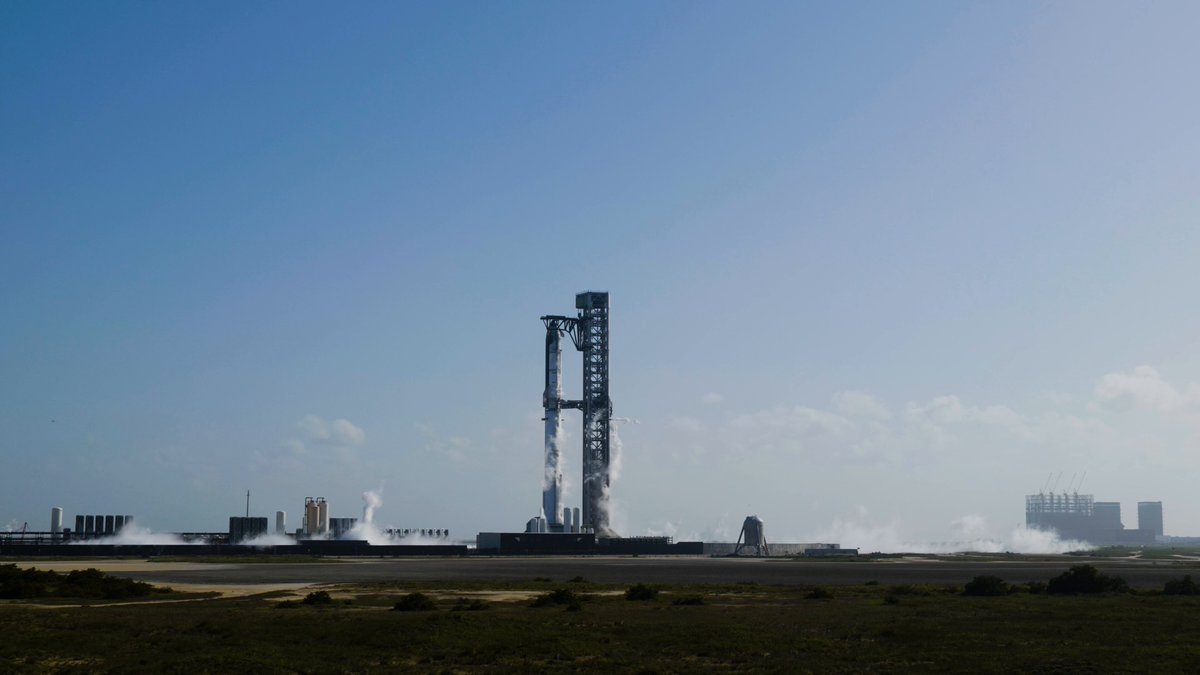
On July 25, 2026, Elon Musk posted four words about Starship that cut through a lot of noise: 'The most powerful moving object ever created by humans.' It wasn't a press release or a technical briefing — just a caption on a video. But the engineering record behind that statement is worth unpacking, especially after SpaceX completed its 13th Super Heavy-Starship launch the same day.

The Numbers That Back the Claim
The core of Musk's assertion rests on thrust. Starship's Super Heavy booster — powered by 33 Raptor engines — generates approximately 16.7 million pounds-force (lbf) of thrust at liftoff, or roughly 74 meganewtons. For context, the Saturn V, still the most iconic heavy-lift rocket in history, produced around 7.6 million lbf. Starship nearly doubles that figure.
| Metric | Starship (V3) | Saturn V |
|---|---|---|
| Liftoff Thrust | ~16.7M lbf (74 MN) | ~7.6M lbf (34 MN) |
| Height (fully stacked) | ~121–124 m (397–407 ft) | ~111 m (363 ft) |
| Payload to LEO (reusable) | 100–150 metric tons | ~130 metric tons (expendable) |
| Engines | 39 total (33 + 6) | 5 (F-1 first stage) |
| Reusability | Full (design goal) | Expendable |
The Starship V3 iteration also introduces Raptor 3 engines with meaningfully higher per-engine output: sea-level variants produce 250 metric tons-force (tf), while vacuum-optimized engines reach 275 tf. That per-engine improvement compounds across 33 boosters in a way earlier Raptor generations couldn't match.
What Flight 13 Actually Showed
The July 25 launch — the 13th overall Super Heavy-Starship test and the second flight of a V3 configuration — delivered a mixed result. According to reports, the Super Heavy booster experienced engine issues that led to a 'hard' splashdown rather than a controlled recovery. The Starship upper stage, however, successfully completed its suborbital hop profile.
That split outcome is worth reading carefully. The upper stage performing as expected suggests the V3 structural and propulsion redesigns are holding up under flight conditions. The booster's rough landing is a setback for the rapid reusability goal — the whole economic case for Starship depends on catching and re-flying both stages quickly — but it doesn't invalidate the thrust record or the broader trajectory of the program.
SpaceX has consistently treated each test flight as a data-gathering exercise rather than a pass/fail milestone. The April 2026 static fire of Super Heavy Booster 19 (the V3 booster) was cited as a key validation step before this flight, and the program has moved from Flight 1 to Flight 13 in a compressed timeline that no other heavy-lift program has matched.
Why the 'Most Powerful' Label Holds Up
Musk's claim is specific: the most powerful moving object. That qualifier matters. Stationary test stands, nuclear reactors, and industrial machinery can generate enormous forces — but Starship's 74 meganewtons of thrust is applied to a vehicle that actually lifts off the ground and accelerates. No other flying or moving machine in recorded history comes close to that figure.
The Saturn V comparison is the most credible counterpoint, and Starship clears it by nearly 2x. The Space Shuttle's combined liftoff thrust reached roughly 31 meganewtons — significant, but less than half of Starship's output. The claim isn't marketing hyperbole dressed up as engineering; the numbers support it.
What remains unresolved is whether SpaceX can make that power routine. A rocket that generates record thrust but can only fly occasionally isn't the infrastructure-grade launch system the company is building toward. The booster recovery issue on Flight 13 is a reminder that translating raw capability into operational reliability is the harder problem — and the one that will define whether Starship changes the economics of space access or remains an impressive engineering demonstration. For more on SpaceX's progress, see our SpaceX coverage.
🚀 Following the Starship program? See every test flight, official outcome and the next launch window in our SpaceX Starship Tracker.
Sources & reporting notes
The links below identify the material source records used for this report.
- @elonmusk on X (2026-07-25T20:37:55.000Z) — Direct source
Source links are preserved as published or accessed. See our editorial standards and corrections policy.
The BASENOR Editorial Desk covers Tesla, SpaceX, and related technology, curating reporting from primary sources — official accounts, regulatory filings, and software release data. Every article passes source-record and fact-checking review before publication. About the newsroom.
This report was curated by the BASENOR Editorial Desk from the sources listed above. Read our editorial standards or email editorial@basenor.com to report an error.