30-Second Brief
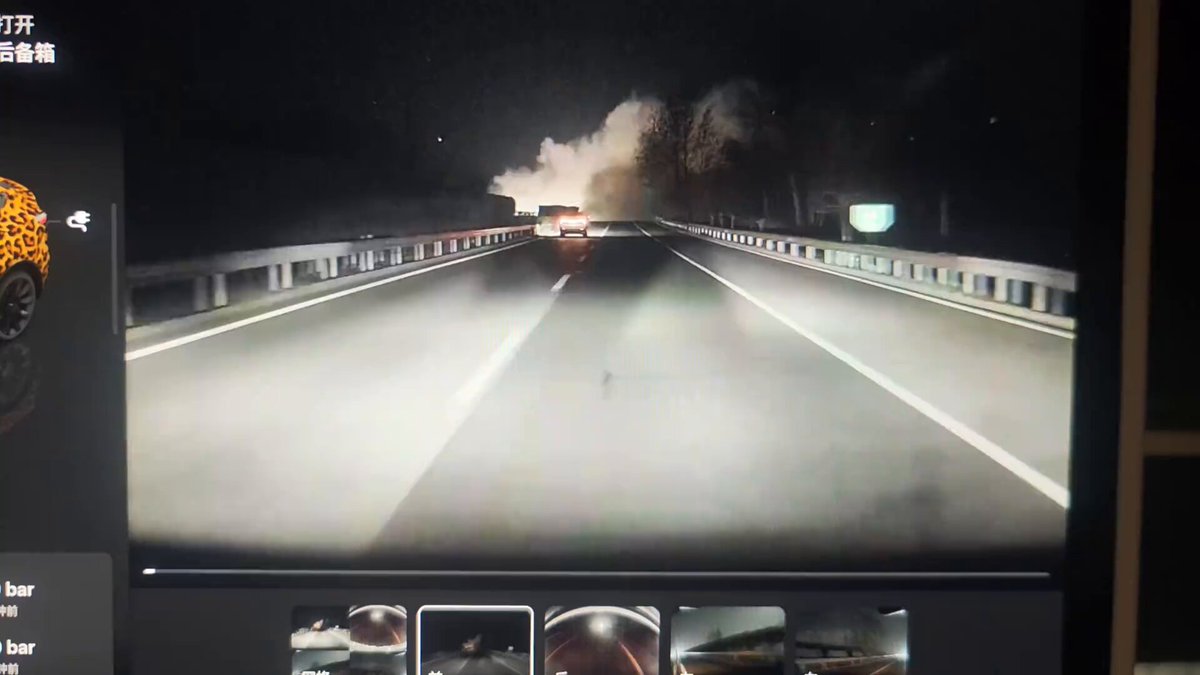
The News: A real-world incident captured on video shows Tesla's Automatic Emergency Braking (AEB) and vehicle handling working together to prevent what could have been a serious crash.
Why It Matters: With ongoing regulatory scrutiny of Tesla's driver-assistance systems, this footage is a concrete reminder of what the active safety stack actually does when it counts.
Source: @TeslaNewswire on X
Tesla's AEB Prevents a Major Crash — Here's What the Video Shows
Tesla's active safety systems exist for exactly this kind of moment. A video circulating on X shows a Tesla's Automatic Emergency Braking (AEB) engaging in a real-world near-miss, with the car's handling characteristics also playing a role in keeping the situation from turning catastrophic. It's the kind of footage that's worth paying attention to — not as marketing, but as a real demonstration of what these systems do under pressure.

📊 How Tesla's AEB Actually Works
AEB isn't magic — it's a layered system. According to Tesla's official documentation, Automatic Emergency Braking is designed to reduce the severity of a collision, not guarantee avoidance. That distinction matters. The system uses the vehicle's forward-facing cameras and sensor suite to detect objects in the car's path and applies the brakes automatically when an imminent collision is detected.
📋 AEB: Key Operating Parameters
| Active Speed Range | ~3 mph (5 km/h) to 124 mph (200 km/h) |
| Detection Method | Forward-facing cameras + processing |
| System Goal | Reduce collision severity |
| Known Limitations | Dirty cameras, glare, dust, poor visibility |
Source: Tesla official documentation
Beyond braking, Tesla's vehicle dynamics — low center of gravity from the floor-mounted battery pack, near-instant torque response, and precise steering — give drivers a meaningful handling advantage in emergency maneuvers compared to many conventional vehicles. In a sudden-avoidance scenario, that combination of active braking and chassis capability can be the difference between a close call and a collision report.
The Bigger Safety Picture: Progress and Scrutiny
This incident lands against a complex regulatory backdrop. As of March 2026, NHTSA escalated its engineering analysis of 3.2 million Tesla vehicles equipped with Full Self-Driving (FSD), focusing on whether the camera-based system adequately detects and warns drivers in low-visibility conditions — glare, dust, airborne obstructions. Nine incidents have been identified in that probe, including one fatal crash and two injury crashes.
Separately, Tesla issued a voluntary recall in March 2026 covering approximately 11,704 vehicles — certain Model S, Model X, and Model 3 units from 2017–2021, plus some Model Y vehicles from 2020–2021 — after a software error was found that could trigger false forward-collision warnings or unexpected AEB activation. Tesla stated it was unaware of any crashes or injuries tied to that specific bug.
And on the positive side of the ledger: a report published April 2, 2026 by the Insurance Institute for Highway Safety (IIHS) and the Highway Loss Data Institute (HLDI) found that electronic safety systems including frontal and rearward AEB are leading to measurably fewer accidents, with later-generation AEB systems showing significant improvement in effectiveness.
The picture that emerges is nuanced. AEB works — and works better than it used to. But it has real-world limits, and those limits are exactly what regulators are probing.
🔭 The BASENOR Take
| Timeline | Incident shared April 2, 2026; NHTSA FSD probe ongoing since March 2026 |
| Impact Level | Medium — reinforces real-world safety value for owners; doesn't resolve regulatory questions |
| Confidence | High — AEB functionality is well-documented; specific incident details pending broader reporting |
Videos like this one matter for a specific reason: they put a human face on what is otherwise an abstract technical debate. NHTSA investigations, recall filings, and IIHS reports are important — but they don't communicate the same way a dashcam clip of AEB saving the day does.
That said, owners should resist the temptation to treat AEB as a safety net that removes driver responsibility. Tesla's own documentation is clear: the system is designed to reduce severity, not eliminate risk. Dirty cameras, bright glare, or blowing dust can all degrade performance. The NHTSA probe into FSD's low-visibility performance is a direct response to exactly those limitations.
The honest read: Tesla's active safety systems are genuinely effective and improving — the IIHS data backs that up. But they work best when owners understand what they're designed to do, keep cameras clean, and stay engaged behind the wheel. The car's safety stack is a co-pilot, not an autopilot.
📰 Deep Dive: What This Means for Your Tesla
For the 500,000+ Tesla owners on the road today, incidents like this are a useful reminder to audit your own vehicle's safety setup. AEB is active by default on all current Tesla models, but its effectiveness is directly tied to camera cleanliness. A film of road grime or a bug-splattered nose camera can meaningfully reduce the system's detection capability — especially at highway speeds where reaction windows are measured in milliseconds.
The recent false-AEB recall also highlights something worth knowing: software governs these systems entirely. A bug introduced in one update can cause unexpected braking; a fix in the next update can resolve it. Staying current on Tesla's OTA updates isn't just about new features — it's about keeping the safety stack running on its latest, most validated code. If your vehicle is among the approximately 11,704 affected by the March 2026 recall (certain 2017–2021 Model S, Model X, Model 3, and 2020–2021 Model Y vehicles), confirm your software is up to date and that the recall remedy has been applied.
Finally, the IIHS finding published today is worth bookmarking: newer AEB systems are significantly more effective than earlier generations. If you're driving an older Tesla and haven't seen a major software update in a while, it's worth checking whether your vehicle's collision avoidance logic has been updated. For a full look at how Tesla's software updates affect safety features, see our all software updates coverage.
Related Gear
Gear up your Tesla with tested, custom-fit BASENOR accessories — shop Tesla accessories →
Sources & reporting notes
The links below identify the material source records used for this report.
- @TeslaNewswire on X (2026-04-02T20:17:53.000Z) — Direct source
Source links are preserved as published or accessed. See our editorial standards and corrections policy.
The BASENOR Editorial Desk covers Tesla, SpaceX, and related technology, curating reporting from primary sources — official accounts, regulatory filings, and software release data. Every article passes source-record and fact-checking review before publication. About the newsroom.
This report was curated by the BASENOR Editorial Desk from the sources listed above. Read our editorial standards or email editorial@basenor.com to report an error.