📌 UPDATE — September 4, 2026
Tesla's Cybercab launch event has now concluded in Austin. Following a short formal presentation officially integrating the pedal-less, steering-wheel-less two-seater into Tesla's robotaxi fleet, attendees were given rides in the vehicle. Live demonstrations showed the Cybercab navigating a heavily congested downtown Austin — handling hundreds of pedestrians and complex urban scenarios — with its real-time perception overlay visible to passengers on an interior screen. Reactions from the event were mixed: enthusiasts praised the vehicle's autonomous performance in challenging conditions, while some analysts characterized the overall event presentation as underwhelming relative to expectations.

📌 UPDATE — September 4, 2026
Tesla's Cybercab is now officially carrying public passengers in Austin. Early riders report a comfortable, spacious cabin with notably soft suspension and impressively smooth FSD performance. The launch event drew roughly 400 attendees — about half Tesla employees — and included demo displays, food, a 15-minute keynote, and rides. The onboard sound system has also drawn praise, described as a genuine Tesla audio setup delivering cinematic quality, though slightly below the Premium Model Y or Cybertruck tier.
On the service side, the robotaxi app delivers clean arrival notifications, and the Cybercab operates across the full Austin geofence — riders can select any destination within the city, with potential trip lengths of up to an hour or more. There are no fixed route restrictions.
@SawyerMerritt · Sep 4, 2026
"BREAKING: Tesla has officially started offering Cybercab rides to the public... The cabin is comfortable and spacious, the suspension is soft, and FSD is VERY smooth. It's an incredible vehicle."
View on X →
Tesla's Cybercab launch event is underway in Austin, Texas, with attendees now inside the venue and social coverage going dark until the reveal wraps. Ahead of the doors closing, longtime Tesla observer Whole Mars Catalog offered one of the sharpest framings yet of what the purpose-built robotaxi actually represents: a design exercise in aggressive subtraction, made possible only because a human driver is no longer part of the equation.
According to reporting from Teslarati, Electrek, and Motor1 leading into today's event, the Cybercab is Tesla's first vehicle designed from a clean sheet around full autonomy — no steering wheel, no pedals, and a two-seat cabin optimized for cost-per-mile rather than driver experience. The design philosophy that Whole Mars laid out minutes before entering the venue captures why that matters.

The Subtraction Thesis
The observation from Whole Mars is deceptively simple: once you remove the driver, you can remove almost everything the driver used to need. Rear glass exists because human drivers check blind spots and rear traffic — autonomous sensors don't. A glove box exists because humans store registration, sunglasses, and snacks — a shared robotaxi doesn't want passengers leaving things behind. A glass roof looks premium but forces the HVAC system to fight solar load — a fleet vehicle billing by the mile treats every watt of AC consumption as a direct hit to unit economics.
Individually, each of these deletions is minor. Stacked together, they change the math on manufacturing cost, energy efficiency, cabin cleaning turnaround, and range per kWh — the four levers that determine whether a robotaxi network is profitable or not.
Why This Framing Matters Today
Tesla has been signaling for over a year that the Cybercab is not a Model 3 with the steering wheel unbolted. It is a different product category, targeting a different buyer — namely, Tesla itself, operating the vehicle inside a network. When the launch event details land publicly, expect the pitch to lean heavily on three data points that competitors cannot easily match: production cost per unit, energy consumption per mile, and downtime between rides.
Every design decision Whole Mars flagged — no rear glass, no glove box, no glass roof — feeds directly into those three metrics. It's the same instinct that produced the Cybertruck's flat stainless panels (no paint shop) and the Model Y's giga-cast rear underbody (fewer welds, fewer robots). Tesla's manufacturing playbook has consistently rewarded removing parts over adding features. The Cybercab is that playbook applied to the entire vehicle concept, not just the assembly line.
Key Questions the Event Should Answer
| Question | Why It Matters |
|---|---|
| Production timeline | Tesla has previously targeted 2026 for start of production; today's event should confirm or reset that date. |
| Unit cost | Elon Musk has referenced a sub-$30,000 target. Any pricing signal today reshapes the AV competitive landscape. |
| Fleet vs. retail | Will individuals be able to buy one, or is this Tesla-network only? This determines the addressable market entirely. |
| Robotaxi network integration | How the Cybercab plugs into Tesla's Austin robotaxi service — already operating with Model Y vehicles — is the key operational question. |
What Tesla Owners Should Watch
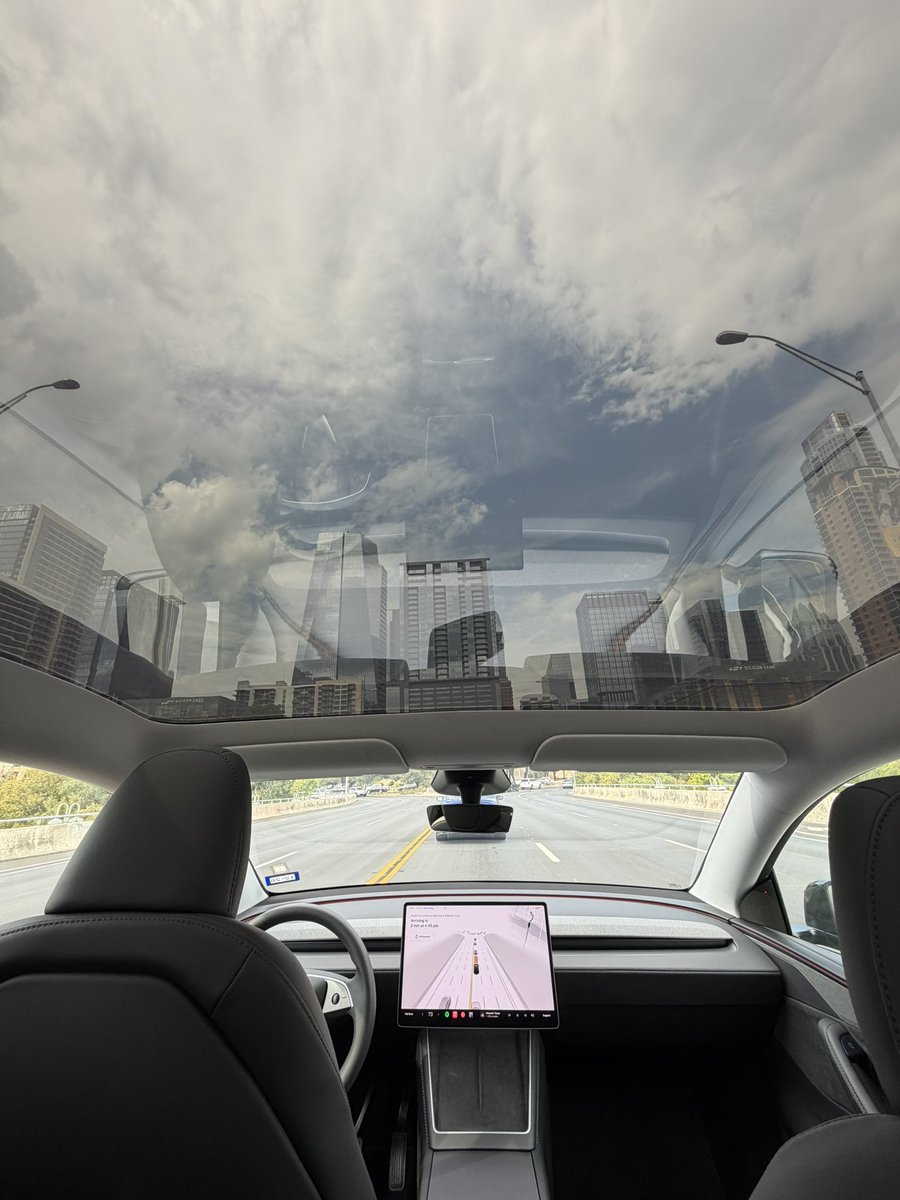
Even if you never ride in a Cybercab, today's event has direct implications for the current Tesla fleet. The autonomy stack powering the Cybercab is the same FSD software running on customer-owned Model 3, Model Y, S, and X vehicles. Any capability Tesla demonstrates on the Cybercab platform — unprotected turns in dense urban environments, high-speed merges without a driver present, pickup and drop-off logic — is capability the existing fleet's Hardware 4 vehicles will eventually inherit through over-the-air updates.
The reverse is also true. If today's demonstrations reveal a hardware gap that the current fleet cannot close through software alone, that becomes a significant story for owners weighing whether to hold or trade their vehicle. Watch closely for any mention of new sensor placements, compute upgrades, or camera positions that don't exist on today's shipping cars.
Editor's View
The most interesting thing about the pre-event framing isn't the specific deletions — it's the underlying idea that autonomy isn't just a feature you add to a car. It's a permission slip to redesign what a car fundamentally is. Every automaker chasing robotaxis has so far bolted autonomy onto existing platforms: Waymo modifies Jaguars and Zeekrs, Cruise used modified Bolts, Zoox built its own but retained conventional cabin conventions. Tesla is the first to treat the removal of the driver as an invitation to remove everything else the driver justified.
Whether that gamble pays off depends entirely on what's revealed inside the venue over the next few hours. But the framing itself is worth marking down: for Tesla, autonomy is not the destination. It's the tool that unlocks a completely different vehicle. We'll update this story as details from the event become public.
🚕 Following the Robotaxi rollout? See every operating city, launch date and announced market in our Tesla Robotaxi Tracker.
Related Gear
Gear up your Tesla with tested, custom-fit BASENOR accessories — shop Tesla accessories →
Sources & reporting notes
The links below identify the material source records used for this report.
- @wholemars on X (2026-09-03T21:41:01.000Z) — Direct source
- @wholemars on X (2026-09-03T21:44:46.000Z) — Direct source
Source links are preserved as published or accessed. See our editorial standards and corrections policy.
The BASENOR Editorial Desk covers Tesla, SpaceX, and related technology, curating reporting from primary sources — official accounts, regulatory filings, and software release data. Every article passes source-record and fact-checking review before publication. About the newsroom.
This report was curated by the BASENOR Editorial Desk from the sources listed above. Read our editorial standards or email editorial@basenor.com to report an error.