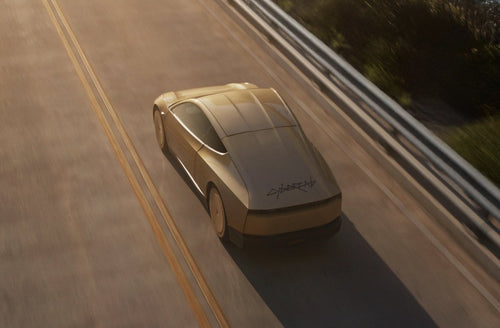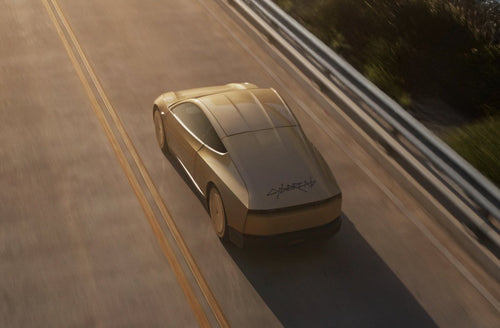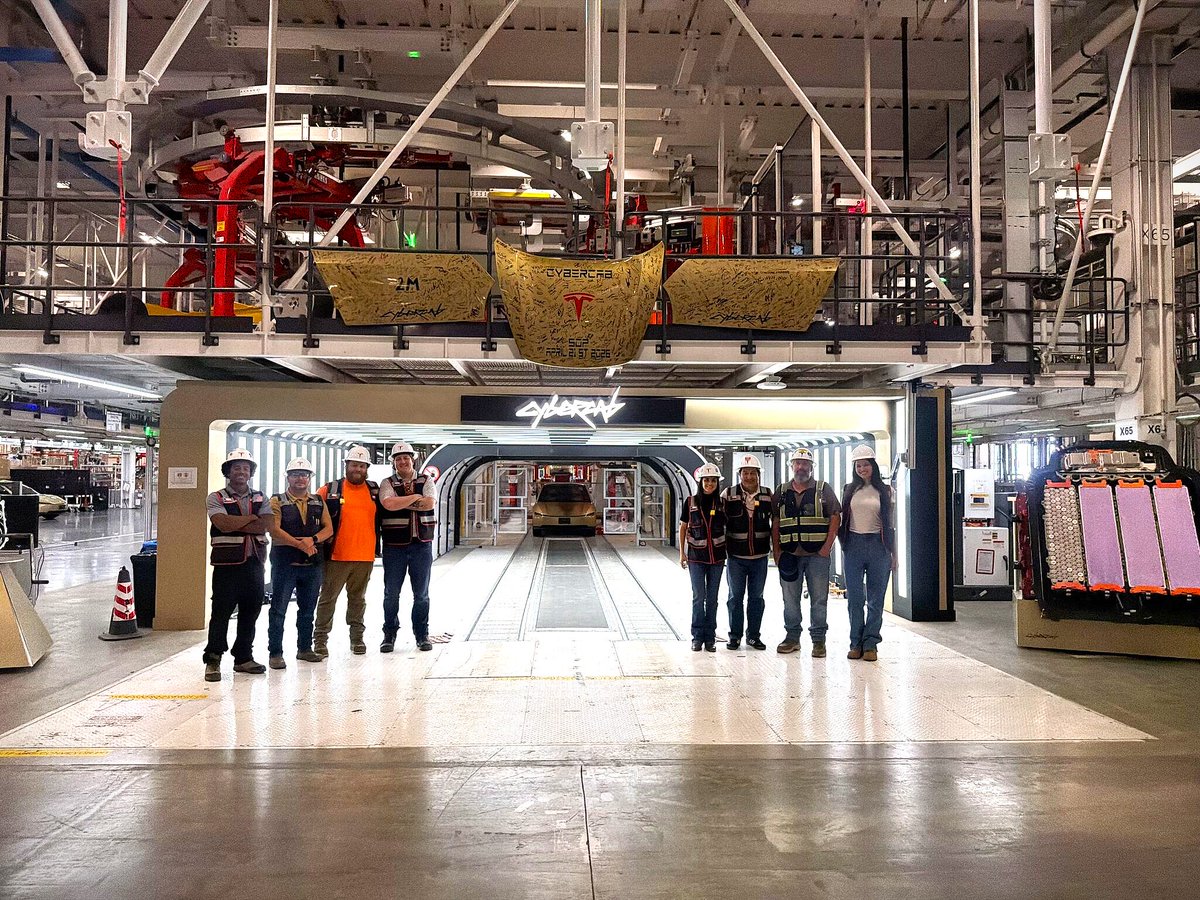
Fresh images circulating this week confirm what Tesla watchers have been piecing together for months: the Cybercab officially entered production at Gigafactory Texas on April 21, 2026. The photos, published by The Tesla Newswire on August 20, offer the clearest look yet at the moment Tesla's purpose-built, two-seat autonomous vehicle transitioned from pilot builds to a live production line in Austin. For a program Elon Musk has framed as the cornerstone of Tesla's next decade, this is the milestone the robotaxi story pivots on.

What the Images Confirm
The photos published by The Tesla Newswire show Cybercab units on the assembly line at Giga Texas with a documented date of April 21, 2026. That timestamp matters because it lines up precisely with the mass-production window Tesla telegraphed earlier in the year. According to reporting compiled from Tesla's own communications, the first production-intent unit rolled off the Giga Texas line in February 2026, followed by a ramp toward volume manufacturing in April. Musk publicly stated production began in Q2 2026 — a claim these images now visually corroborate.
By early March 2026, roughly 25 Cybercab units had been observed across three staging locations at Giga Texas, according to sightings reported by revtesla.com and other tracking outlets. That figure climbed past 36 production-intent units by March 25. By July 2026, hundreds of Cybercabs were spotted near the assembly plant — a pace consistent with a factory moving out of pilot mode and into a genuine ramp.
Why April 21 Is the Date That Matters
Tesla has produced Cybercab prototypes since the vehicle's October 2024 unveiling at the "We, Robot" event on the Warner Bros. studio lot. What separates the April 21 milestone from earlier builds is the shift from hand-assembled show cars and validation units to serialized production off a dedicated line. Everything before that date was, in Tesla's parlance, pilot work. Everything after is a manufactured vehicle destined for the fleet.
That distinction has practical consequences. Serialized production means fixed tooling, validated suppliers, and a stamped Vehicle Identification Number — the prerequisites for federal certification, insurance coverage, and eventual deployment into a commercial robotaxi service. It also means Tesla is now accumulating real per-unit cost data, which is what Musk has repeatedly said will determine whether the sub-$30,000 target price he floated at the reveal is achievable.
Key Figures
| Metric | Detail |
|---|---|
| Production Start Date | April 21, 2026 |
| Location | Gigafactory Texas, Austin |
| First Pilot Unit Off Line | February 2026 |
| Units Observed (Early March 2026) | ~25 across 3 Giga Texas locations |
| Units Observed (March 25, 2026) | 36+ production-intent units |
| Volume Sighted (July 2026) | Hundreds near assembly plant |
How Giga Texas Fits Into the Plan
Gigafactory Texas is now Tesla's most versatile manufacturing site. The Austin campus already produces the Cybertruck and Model Y for the domestic market, and it houses Tesla's AI and robotaxi program infrastructure. Adding Cybercab to that footprint concentrates Tesla's next-generation vehicle bets — the Cybertruck, the Cybercab, and eventually the platform elements Optimus draws from — in a single facility.
The Cybercab uses what Tesla has described as an "unboxed" manufacturing process — a departure from the traditional linear assembly line where the vehicle body is built as a single skeleton before components are added. Instead, subassemblies are built in parallel and joined late. Tesla has said this approach is central to hitting the aggressive per-unit cost targets required for a viable robotaxi economic model. April 21 is therefore not just a production start — it's the first real-world test of whether unboxed manufacturing works at scale.

What It Means for Tesla Owners
For current Tesla owners, the Cybercab isn't a car you'll be buying to sit in your driveway — Tesla has been clear the vehicle is being built primarily for its own robotaxi network, not retail sales. But the ramp has second-order effects that matter to the existing fleet.
First, the software stack. The Full Self-Driving system that powers the Cybercab is the same neural-network platform Tesla is iterating on for HW3 and HW4 vehicles. Every mile a Cybercab drives on public roads generates data that feeds back into FSD training — data your car will ultimately benefit from through software updates. Second, the manufacturing lessons. Any cost breakthrough Tesla achieves on the unboxed line at Austin will inform the eventual next-generation Model 2/affordable EV program, which Musk has said shares platform elements with the Cybercab.
What to Watch Next
The August 20 photo drop closes one question — did production actually start when Tesla said it would? — but opens several more. Volume ramp is the immediate one. Musk has warned that Cybercab output will start slow before scaling, and the gap between April's line-start and the hundreds of units sighted by July suggests Tesla is moving faster than the ultra-conservative initial guidance implied.
Regulatory clearance for driverless commercial operation is the second variable. Tesla launched a supervised robotaxi pilot in Austin in June 2025 using Model Y vehicles, but the Cybercab has no steering wheel or pedals — meaning it cannot legally operate on U.S. public roads under current federal standards until Tesla either secures an exemption under the FMVSS regulations or a rewrite of those standards clears Congress or NHTSA.
The third question is the customer proposition. Tesla has hinted individual Cybercabs may eventually be available for private purchase, but the primary business case remains a Tesla-owned autonomous ride-hail fleet competing directly with Waymo and existing rideshare services. Whether Tesla flips the switch on a commercial Cybercab service in 2026 or waits until 2027 will define how quickly this April 21 milestone converts into revenue.
For now, the images speak for themselves: after years of concept renders and stage prototypes, the Cybercab is a real car being built in a real factory. The clock on the robotaxi era just started ticking for real.
🚕 Following the Robotaxi rollout? See every operating city, launch date and announced market in our Tesla Robotaxi Tracker.
Related Gear
Gear up your Tesla with tested, custom-fit BASENOR accessories — shop Tesla accessories →
Sources & reporting notes
The links below identify the material source records used for this report.
- @TeslaNewswire on X (2026-08-20T05:13:24.000Z) — Direct source
Source links are preserved as published or accessed. See our editorial standards and corrections policy.
The BASENOR Editorial Desk covers Tesla, SpaceX, and related technology, curating reporting from primary sources — official accounts, regulatory filings, and software release data. Every article passes source-record and fact-checking review before publication. About the newsroom.
This report was curated by the BASENOR Editorial Desk from the sources listed above. Read our editorial standards or email editorial@basenor.com to report an error.