The News: A video circulating on X shows Tesla's FSD (Supervised) system braking hard the moment a red light enters its field of view, then reversing — raising immediate questions about whether this is a safety feature working as intended or a dangerous edge-case failure.
Why It Matters: With NHTSA's FSD investigation recently upgraded to an Engineering Analysis covering up to 3.2 million Tesla vehicles, any unusual intersection behavior is under intense scrutiny — and this clip adds fresh fuel to an already active regulatory fire.
Source: @TeslaNewswire on X
What You're Seeing in the Video
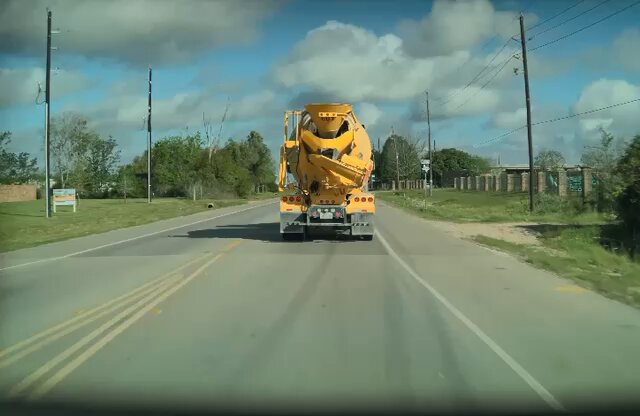
The clip, shared by The Tesla Newswire, shows a Tesla running FSD (Supervised) approaching an intersection. The moment a red light becomes visible to the car's cameras, the system applies hard braking — then, rather than holding position, the vehicle begins to reverse. The behavior is jarring enough that the original post poses the question directly: did FSD just save a life, or was it dangerous driving?

Two Interpretations — And Both Have Merit
Before jumping to conclusions, it's worth considering both readings of this behavior.
The charitable interpretation: FSD detected a red light late — possibly due to occlusion, a sharp curve, or an unusual signal placement — and executed an aggressive stop to avoid running it. The reversal could reflect the system recognizing it had overshot a stop line and attempting to correct. This would actually align with FSD's broader goal of traffic signal compliance. In fact, just days ago on March 25, 2026, a Cybertruck running FSD (Supervised) v14.2.2.5 was documented autonomously reversing at an intersection to create space for a wide-turning semi-truck — demonstrating that FSD does use reverse as a deliberate, context-aware maneuver in some scenarios.
The concerning interpretation: Hard braking followed by reversing in live traffic is inherently risky. A vehicle behind the Tesla would have no warning of the sudden stop, and reversing on a public road — even briefly — creates real collision potential. If this behavior stems from a perception delay (FSD seeing the red light too late to execute a normal stop), that's a calibration problem worth flagging.
The NHTSA Investigation Context You Need to Know
This video doesn't exist in a vacuum. NHTSA has been actively investigating Tesla's FSD system for traffic signal compliance since October 2025, when it opened Preliminary Evaluation PE25012. That probe was upgraded to a full Engineering Analysis (EA26002) on March 18, 2026 — just 12 days ago — covering approximately 2.88 million to 3.2 million Tesla vehicles from model years 2016–2026.
The numbers behind that investigation are sobering: by December 2025, NHTSA had identified 80 FSD-related incidents tied to red light behavior, drawn from 62 driver complaints, 14 Tesla field reports, and four media accounts. At least six of those incidents involved crashes where FSD-equipped vehicles continued through red lights and struck other vehicles — four of which resulted in injuries.
It's important to note that the NHTSA investigation has focused primarily on FSD running red lights, not on the hard-braking-and-reversing behavior shown in this video. These may represent two distinct edge cases in FSD's intersection logic — one where the system fails to stop, and one where it stops too aggressively.
⚠️ NHTSA FSD Investigation — Key Facts
Where FSD v14.2.2.5 Stands Right Now
Tesla is currently rolling out FSD (Supervised) version 14.2.2.5 to Hardware 4 vehicles. This release includes an upgraded neural network vision encoder specifically designed to improve performance around emergency vehicles, road obstacles, and human gestures at intersections. Whether the behavior in this video reflects a bug in that version — or an older build — isn't confirmed from the source clip alone.
For owners actively using FSD, the key reminder remains unchanged: FSD (Supervised) requires constant driver attention and intervention capability at all times. Tesla's own designation makes this explicit — this is not an autonomous system.
🔭 The BASENOR Take
| Factor | Assessment |
|---|---|
| Impact Level | Medium-High — adds to a pattern under active regulatory review |
| Confidence in Assessment | Moderate — single video clip, no version confirmation, no driver context |
| Regulatory Risk | Elevated — NHTSA Engineering Analysis already active |
| Precedent for Reversal Behavior | Exists — Cybertruck reversed intentionally at intersection on Mar 25, 2026 |
One video clip is not a fleet-wide pattern. But the timing matters: this surfaces just 12 days after NHTSA escalated its FSD investigation to an Engineering Analysis — the step before a formal recall determination. Regulators are already asking hard questions about FSD's intersection logic. A clip showing hard braking and reversal at a red light, regardless of whether the system was technically correct, is exactly the kind of footage that ends up in a regulatory filing.
The harder question isn't whether FSD can reverse at intersections — we know it can, and in some cases it should. The question is whether drivers are adequately prepared for it. Most Tesla owners using FSD expect the car to brake or hold position at a red light. A sudden reversal, even a short one, is a behavior that could easily catch a following driver off guard — and that's a real-world risk that software correctness alone doesn't solve.
Watch for whether this clip surfaces in NHTSA's ongoing Engineering Analysis documentation, and whether Tesla issues any acknowledgment through a software note in an upcoming FSD release. If v14.2.2.5's vision encoder improvements don't address this edge case, it's a reasonable candidate for a targeted fix in the next build.
📋 Tracking Tesla software? See every firmware, FSD and app version in one place in our Tesla Software Update Tracker.
Related Gear
Gear up your Tesla with tested, custom-fit BASENOR accessories — shop Tesla accessories →
Sources & reporting notes
The links below identify the material source records used for this report.
- @TeslaNewswire on X (2026-03-30T19:59:33.000Z) — Direct source
Source links are preserved as published or accessed. See our editorial standards and corrections policy.
The BASENOR Editorial Desk covers Tesla, SpaceX, and related technology, curating reporting from primary sources — official accounts, regulatory filings, and software release data. Every article passes source-record and fact-checking review before publication. About the newsroom.
This report was curated by the BASENOR Editorial Desk from the sources listed above. Read our editorial standards or email editorial@basenor.com to report an error.