30-Second Brief
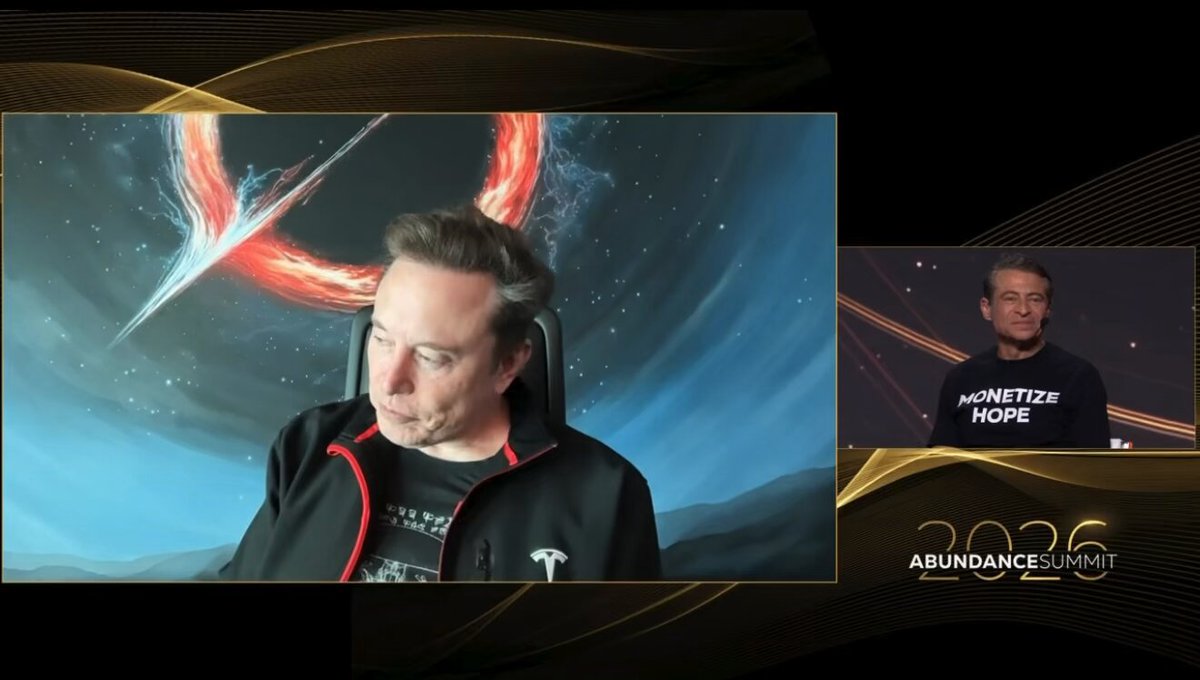
The News: At the Abundance Summit, Elon Musk argued that highly dexterous, AI-powered humanoid robots — like Tesla's Optimus — will democratize access to world-class medical care for every person on Earth.
Why It Matters: This is the clearest and most personal statement Musk has made linking Optimus directly to healthcare — and it comes as Tesla prepares to unveil Optimus Version 3 in Q1 2026.
Source: @SawyerMerritt on X
Tesla Optimus as Your Future Surgeon: Musk's Medical Vision Explained
At the Abundance Summit on March 12, 2026, Elon Musk made one of his most personal and specific arguments yet for why humanoid robots matter — and it wasn't about factory floors or logistics. He went straight to healthcare, and he made it personal.

What Musk Actually Said
Musk's core argument, captured in the interview clip shared by Sawyer Merritt, is straightforward: if you build a humanoid robot with very high dexterity and genuine intelligence, you've effectively built a medical specialist that anyone on Earth can access. He grounded this in his own experience, referencing a neck surgery he had to undergo three times — implying that better surgical precision and access could have changed that outcome.

The quote is worth sitting with: "If you have humanoid robots that have very high dexterity, and are smart, everyone on earth will have access to better medical care." That's not a vague tech-optimism statement. It's a direct product thesis for Optimus.
📊 Key Figures
| Metric | Value | Context |
|---|---|---|
| Current Optimus Version | 2.5 | Unveiled September 2025 |
| Next Version Reveal | Version 3 — Q1 2026 | 22 degrees of freedom in hands |
| 2025 Production Target | 5,000 – 10,000 units | Over 1,000 prototypes built by mid-2025 |
| 2026 Production Target | 50,000 – 100,000 units | Musk's stated scaling goal |
| Surgeon Replacement Prediction | Within 3 years | Musk statement, January 2026 |
| First Commercial Deployment | Up to 10,000 units (PharmAGRI) | Pharmaceutical manufacturing, not direct patient care |

🔭 The BASENOR Take
Timeline: Long-term (3–5 years for meaningful medical deployment)
Impact Level: 🔴 High — if even partially realized, this reshapes how Tesla is valued as a company
Confidence: Medium — vision is consistent and increasingly specific, but execution remains early-stage
The medical framing is new in one important way: Musk made it personal. He didn't talk about abstract global health statistics — he talked about his own neck surgery, done three times. That's a deliberate rhetorical move. It's designed to make the Optimus medical thesis feel visceral and real, not speculative.
And the timing isn't accidental. Tesla is weeks away from unveiling Optimus Version 3, a robot Musk has described as appearing "like a person in a robot suit" — one that won't be easily identifiable as a robot. Version 3 is expected to feature 22 degrees of freedom in the hands and three in the wrist and forearm. That level of dexterity is precisely what separates a robot that can fold laundry from one that could, in theory, assist in a surgical suite.
The AI foundation matters here too. Tesla's approach to Optimus autonomy draws directly from the same neural network architecture powering its vehicles — semantic segmentation, object detection, monocular depth estimation — all trained on data from millions of Tesla cars on public roads. That's a meaningful head start over robotics companies building AI pipelines from scratch.
What's real right now: Optimus 2.5 exists, over 1,000 prototypes have been built, and the first commercial agreement (with PharmAGRI, for pharmaceutical manufacturing) is signed. What's still aspirational: any direct patient-care application. No surgical demonstrations have been publicly shown. Musk's January 2026 prediction that Optimus will outperform the best human surgeons within three years is a forward-looking statement, not a current capability.
For Tesla owners, the medical angle is worth tracking for one practical reason: it changes the long-term valuation story for Tesla stock significantly. A company that makes EVs is one thing. A company that makes EVs, autonomous robotaxis, and AI-powered surgical robots is a fundamentally different investment thesis. Musk is clearly building toward that narrative — and the Abundance Summit interview is the clearest articulation of it yet.
🤖 Tracking Tesla's humanoid robot? See every Optimus production milestone and appearance in our Tesla Optimus Tracker.
Related Gear
Gear up your Tesla with tested, custom-fit BASENOR accessories — shop Tesla accessories →
Sources & reporting notes
The links below identify the material source records used for this report.
- @SawyerMerritt on X (2026-03-12T00:41:13.000Z) — Direct source
- @SawyerMerritt on X (2026-03-12T00:21:37.000Z) — Direct source
- @SawyerMerritt on X (2026-03-12T00:41:13.000Z) — Direct source
Source links are preserved as published or accessed. See our editorial standards and corrections policy.
The BASENOR Editorial Desk covers Tesla, SpaceX, and related technology, curating reporting from primary sources — official accounts, regulatory filings, and software release data. Every article passes source-record and fact-checking review before publication. About the newsroom.
This report was curated by the BASENOR Editorial Desk from the sources listed above. Read our editorial standards or email editorial@basenor.com to report an error.