Tesla Energy announced this week that thousands of Powerwalls are heading to San Jose, California — not as a traditional grid expansion project, but as a distributed battery network designed to absorb demand spikes without the years-long delays that come with building new infrastructure. Here's what the deployment actually involves, and why it's a bigger deal than a single tweet suggests.

1. This Is a Virtual Power Plant, Not Just Home Backup
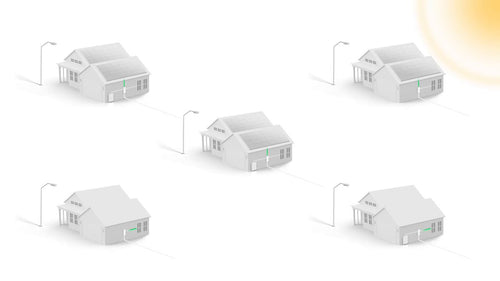
The San Jose deployment is structured as a Virtual Power Plant (VPP) — a coordinated network of residential Powerwalls that collectively behave like a utility-scale battery. San Jose Clean Energy (SJCE), in partnership with Uplight, is targeting 25 MW of dispatchable energy enrolled in its demand response program by 2028. That's enough to meaningfully shift load during peak evening hours without a single new substation being built. Participants in SJCE's Peak Rewards for Smart Homes program can earn up to $300 per year for allowing their Powerwall to be dispatched during grid stress events.
2. Dispatch Windows Are Narrow but Frequent
VPP events in San Jose run between 4 PM and 9 PM — the window when California's grid is most strained as solar generation drops and air conditioning demand peaks. According to program details, up to 36 emergency dispatch events are expected annually, each lasting up to two hours. Participating Powerwalls maintain a minimum 20% backup reserve throughout, so homeowners aren't left with a depleted battery after an event. For most households, the impact on daily use is minimal.
3. The Scale Behind the Announcement
Tesla's San Jose push is part of a much larger global Powerwall story. As of July 2026, Tesla has deployed 1 million Powerwall units worldwide, which have cumulatively prevented 21.5 million power outages. In 2025 alone, Powerwalls participating in VPPs delivered over 20 GWh of energy back to grids globally and prevented 6.5 million outages. Roughly 20% of all deployed Powerwalls are actively enrolled in a VPP — meaning the San Jose project is tapping into a playbook Tesla has already proven at scale.
4. The Hardware Doing the Work
The current Powerwall 3 is the unit going into San Jose homes. Each unit carries 13.5 kWh of usable capacity and a continuous power output of 11.5 kW — enough to run a home's essential loads through an outage or a grid dispatch event. Powerwall 3 includes an integrated solar inverter, a 10-year warranty, and compatibility with Cybertruck and Model Y for Vehicle-to-Home (V2H) functionality. For Tesla owners already running one of those vehicles, a Powerwall 3 turns the whole home energy system into a single coordinated loop.
5. Why "No New Infrastructure" Is the Real Headline
Traditional grid upgrades — new transmission lines, substations, transformer replacements — take anywhere from five to fifteen years to permit and build in California. A distributed Powerwall network can be deployed in months, street by street, as homes are enrolled. Tesla Energy's framing of the San Jose project as a way to meet "growing energy demand without delays" isn't just marketing language; it reflects a genuine shift in how utilities and community choice aggregators like SJCE are thinking about capacity. Batteries at the edge of the grid respond in milliseconds. Concrete and copper do not.
San Jose is a test case worth watching. If SJCE hits its 25 MW enrollment target by 2028, it becomes a replicable model for every California city facing the same infrastructure backlog — and a strong argument for Powerwall adoption well beyond early-adopter Tesla households.
Sources & reporting notes
The links below identify the material source records used for this report.
- @teslaenergy on X (2026-09-03T21:50:37.000Z) — Direct source
Source links are preserved as published or accessed. See our editorial standards and corrections policy.
The BASENOR Editorial Desk covers Tesla, SpaceX, and related technology, curating reporting from primary sources — official accounts, regulatory filings, and software release data. Every article passes source-record and fact-checking review before publication. About the newsroom.
This report was curated by the BASENOR Editorial Desk from the sources listed above. Read our editorial standards or email editorial@basenor.com to report an error.