30-Second Brief
The News: Tesla owner and FSD advocate Whole Mars Catalog claims all 8 million Tesla vehicles on the road today are technically capable of running FSD at the same unsupervised level as Austin Robotaxis — regulation, not hardware, is the only barrier.
Why It Matters: If true, the Robotaxi era doesn't require a new fleet — it unlocks the cars already sitting in your driveway. And when it launches, you won't need to spend $40,000–$50,000 to access it; a few dollars through an app could be enough.
Sources: @wholemars · @wholemars
Tesla's 8 Million Cars Are Already Robotaxi-Ready — Regulation Is the Only Lock
Late Sunday night, prolific Tesla FSD advocate Whole Mars Catalog dropped two tweets that cut through months of Robotaxi speculation with a blunt, firsthand claim: every Tesla on the road today can already drive itself the same way the Austin Robotaxis do. The hardware is there. The software is there. What's missing is a regulatory green light — and a business model that makes it accessible to anyone, not just those who can afford a $40,000–$50,000 vehicle purchase.
For Tesla owners watching the Robotaxi rollout from the sidelines, this is a significant statement — and it's worth unpacking exactly what it does and doesn't mean for your car.

📊 Key Figures
| Metric | Value | Context |
|---|---|---|
| Total Tesla fleet | ~8 million | Per @wholemars claim |
| Estimated HW4 owners | ~3 million | Confirmed Unsupervised FSD-capable per Musk (Jan 2026) |
| Cost to access FSD today | $40,000–$50,000 | Vehicle purchase required |
| Projected Robotaxi access cost | A few dollars per ride | App-based, per @wholemars |
| HW3 compute power | 144 TOPS | vs. HW4's estimated 300–500 TOPS |
The Claim: Regulation, Not Hardware, Is the Bottleneck
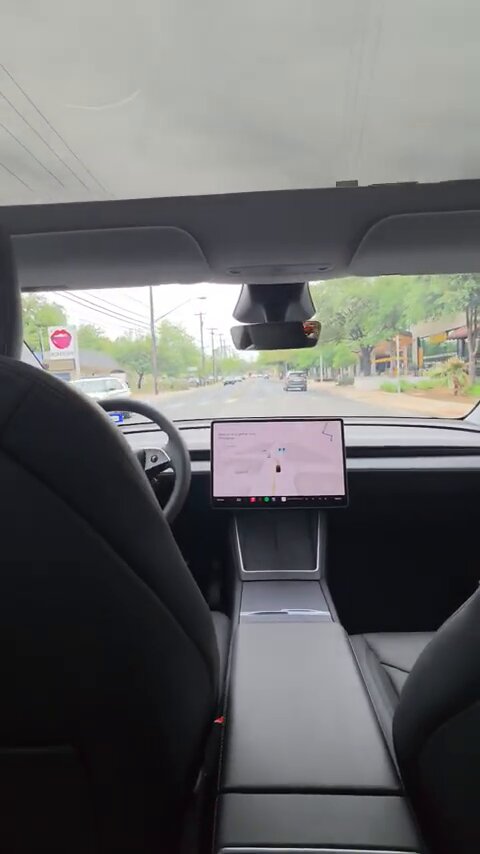
Whole Mars Catalog — who regularly drives with FSD engaged and documents the experience publicly — stated plainly that if driver monitoring were disabled and he were sitting in the backseat, his Tesla would still drive perfectly. The only reason he's legally required to supervise is regulatory: current rules mandate an attentive human behind the wheel.
This framing matters because it shifts the Robotaxi conversation away from "when will the technology be ready" and toward "when will regulators allow it." According to this view, Tesla isn't waiting on an engineering breakthrough — it's waiting on paperwork.
That's a bold claim, and it's worth calibrating against what we know from verified sources. The picture is more nuanced depending on which hardware generation your Tesla runs.
The Hardware Reality: HW3 vs. HW4 vs. What's Coming
Not all 8 million Teslas are created equal when it comes to unsupervised FSD readiness. Here's where things actually stand:
Hardware 4 (HW4): Elon Musk confirmed in January 2026 that HW4 vehicles are capable of achieving Full Self-Driving (Unsupervised) without any hardware upgrades. HW4 began shipping in early 2023 and delivers an estimated 300–500 trillion operations per second — roughly 3–5x the compute of its predecessor. Approximately 3 million Tesla owners have HW4. These owners are in the clearest position when Robotaxi regulations expand.
Hardware 3 (HW3): This is where the story gets complicated. Tesla's VP of Vehicle Engineering Lars Moravy stated in October 2024 that HW3 is "fully Robotaxi-capable." But in the same month, Elon Musk acknowledged there was "some chance that Hardware 3 does not achieve the safety level that allows for Unsupervised FSD" — and promised free upgrades for customers who had purchased FSD if that happened. By February 2026, Tesla had quietly acknowledged that HW3 vehicles may require upgrades to achieve unsupervised capability. HW3 offers 144 TOPS of compute, compared to HW4's substantially higher ceiling.
So when Whole Mars Catalog says "all 8 million" cars are Robotaxi-ready, he's speaking from his own firsthand driving experience with FSD — and his claim reflects the software's capability in supervised mode. Whether every HW3 vehicle will receive regulatory clearance for fully unsupervised operation remains an open question that Tesla itself has hedged on.
The Accessibility Shift: From $50K Purchase to a Few Dollars

The second tweet reframes the Robotaxi opportunity in terms that matter to people who don't own a Tesla — and that's the point. Today, accessing Tesla's self-driving technology requires buying a Tesla. That's a $40,000–$50,000 commitment before you ever experience a single mile of FSD.
Whole Mars Catalog's comparison to a ChatGPT Plus subscription is deliberately accessible: you open an app, you pay a small amount, you get a ride. No vehicle purchase. No FSD add-on. No insurance calculation. Just frictionless access — assuming the service has launched in your city.
This model has profound implications for Tesla's total addressable market. Instead of selling to the subset of consumers who can afford a new EV, Tesla's Robotaxi network could theoretically serve anyone with a smartphone. The constraint shifts from "can you afford a Tesla" to "is Robotaxi available where you live."
🔭 The BASENOR Take
Timeline: Robotaxi is live in Austin. Geographic expansion depends on regulatory approvals, which vary by state and municipality. No confirmed nationwide timeline as of March 2026.
Impact Level: 🔴 High — if the accessibility model described plays out, it represents a fundamental shift in how self-driving technology reaches consumers.
Confidence: Medium. The software capability claim is credible from a firsthand FSD user. The hardware universality claim requires nuance — HW4 owners are on solid ground; HW3 owners face more uncertainty per Tesla's own statements.
What to watch: Tesla's official Robotaxi pricing announcement, HW3 upgrade program details, and which cities are next after Austin.
📰 Deep Dive
What Whole Mars Catalog is describing isn't a future state — it's a present capability being held behind a regulatory gate. That distinction is crucial for understanding where Tesla actually is in the Robotaxi timeline. The engineering work, at least for supervised FSD, is largely done. The variable is legal permission, not lines of code.
The HW3 question remains the most significant unresolved issue for the majority of the existing Tesla fleet. Tesla has sent mixed signals: its own engineering leadership called HW3 Robotaxi-capable, while Musk hedged publicly and the company quietly shifted its position by early 2026. Owners on HW3 who purchased FSD should be watching for official communication about the free upgrade commitment Musk made — that promise hasn't been formally rescinded, but it also hasn't been acted on at scale.
The subscription-style access model is arguably the more transformative idea in these tweets. Tesla's vehicle business has always been constrained by the economics of car ownership. A Robotaxi network flips that model: Tesla becomes a service provider to a market orders of magnitude larger than its current customer base. The per-ride economics, fleet utilization rates, and city-by-city regulatory timelines will determine whether this vision translates into the business transformation Tesla is projecting — but the directional logic is sound. For our full FSD coverage, the story is increasingly less about whether the technology works and more about when the world officially lets it loose.
🚕 Following the Robotaxi rollout? See every operating city, launch date and announced market in our Tesla Robotaxi Tracker.
Related Gear
Gear up your Tesla with tested, custom-fit BASENOR accessories — shop Tesla accessories →
Sources & reporting notes
The links below identify the material source records used for this report.
- @wholemars on X (2026-03-29T23:43:25.000Z) — Direct source
- @wholemars on X (2026-03-29T23:29:48.000Z) — Direct source
Source links are preserved as published or accessed. See our editorial standards and corrections policy.
The BASENOR Editorial Desk covers Tesla, SpaceX, and related technology, curating reporting from primary sources — official accounts, regulatory filings, and software release data. Every article passes source-record and fact-checking review before publication. About the newsroom.
This report was curated by the BASENOR Editorial Desk from the sources listed above. Read our editorial standards or email editorial@basenor.com to report an error.