📌 UPDATE — July 1, 2026
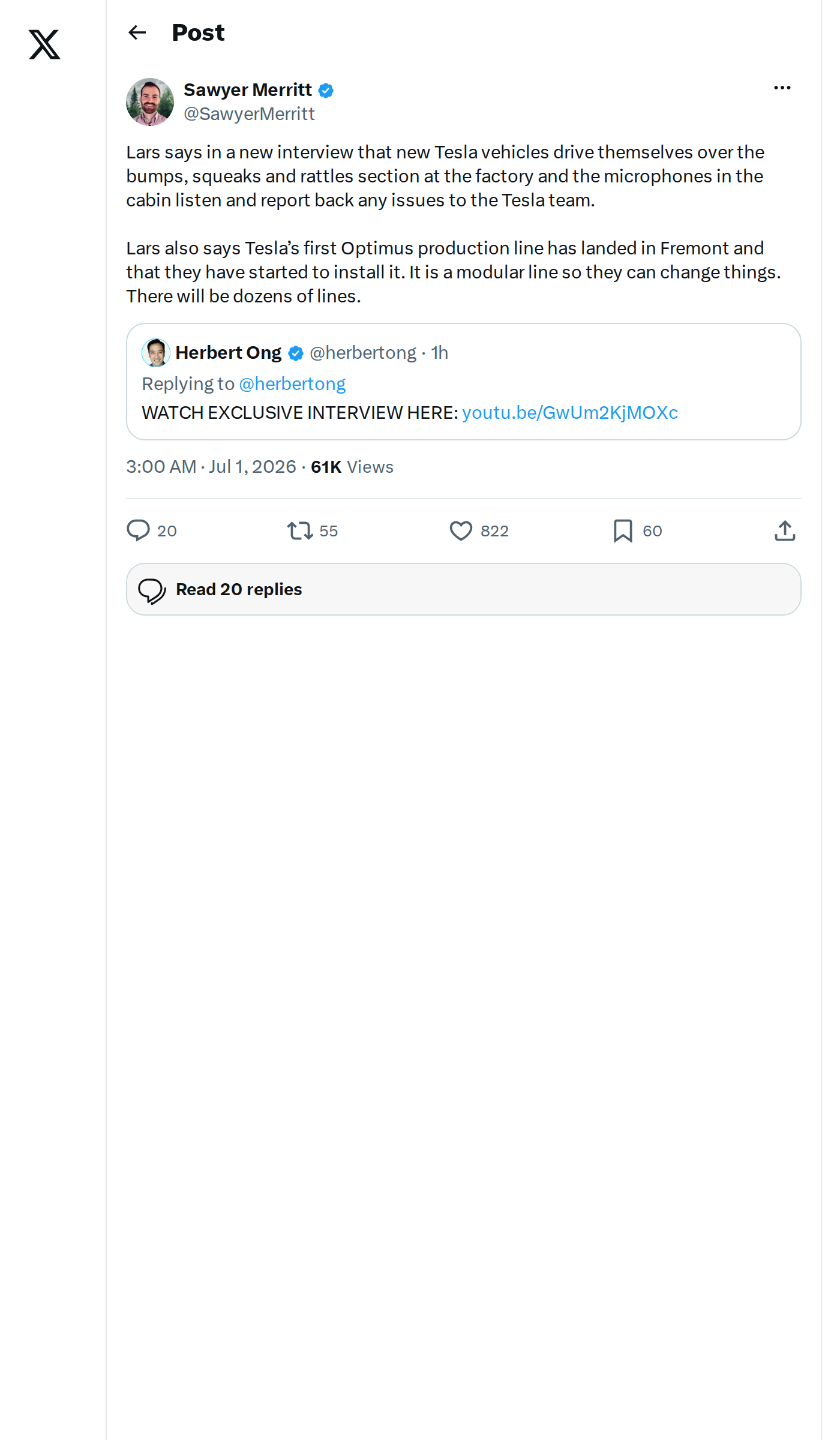
Tesla VP Lars Moravy has revealed new details about the Optimus production line in Fremont: it's a modular system specifically designed to adapt as Optimus' hardware evolves — meaning Tesla won't need to overhaul manufacturing each time the robot's design changes. Moravy confirmed that dozens of lines are planned and can be stood up significantly faster than traditional fixed production setups, signaling a highly scalable rollout strategy. This modularity appears to be a deliberate engineering choice to keep pace with rapid iteration on the robot itself.

📣 @SawyerMerritt via X · July 1, 2026
📌 UPDATE — July 1, 2026
Elon Musk has shared a first-look photo of the Optimus production line actively under construction at Tesla's Fremont factory, offering the clearest visual confirmation yet that manufacturing scale-up is well underway. The image moves the story beyond the arrival of equipment — reported earlier by VP Lars Moravy — to active assembly of the line itself on the factory floor. This suggests Tesla is on track to begin meaningful Optimus output from Fremont in the near term, complementing any production ramp at other facilities.
📌 UPDATE — July 1, 2026
Elon Musk personally walked the Optimus production line at Tesla's Fremont factory today, sharing a photo on X as a first-hand confirmation that manufacturing operations are actively underway. The post, which garnered nearly 1 million views within hours, signals a meaningful step beyond the initial line arrival reported earlier — suggesting ramp-up activity is now in progress on the floor. While no production numbers or timeline milestones were disclosed, Musk's hands-on presence at Fremont underscores the priority Tesla is placing on Optimus manufacturing momentum.
Elon Musk @elonmusk · July 1, 2026"Walking the Optimus production line in Fremont"
 ❤️ 8,181 🔁 1,046 👁️ 954,082
Tesla's humanoid robot ambitions just crossed a concrete threshold. Lars Moravy, Tesla's VP of Vehicle Engineering, confirmed in a new interview that the company's first Optimus production line has officially landed — a physical milestone that signals the shift from prototype-phase engineering to real manufacturing infrastructure.

The confirmation came alongside another notable detail from the same interview: new Tesla vehicles now drive themselves through the factory's bumps, squeaks, and rattles test section autonomously, with cabin microphones actively listening and reporting quality issues back to the engineering team. It's a small glimpse at how deeply Tesla is weaving its autonomy and AI stack into every layer of the business — including the factory floor itself.
According to verified production records, Tesla began Gen 3 Optimus mass production at its Fremont facility in January 2026, with the Gen 3 hand system confirmed production-ready by mid-February. The arrival of a dedicated production line represents the next logical step: moving from component-level manufacturing toward a structured, repeatable assembly process for the full robot.
Tesla has previously stated an internal target of deploying thousands of Optimus units within its own factories before any external commercial rollout. The production line landing suggests that timeline is being actively built toward, not just planned on a slide deck. How quickly that line scales — and what version of Optimus it produces at volume — will be the story to watch over the second half of 2026.
🤖 Tracking Tesla's humanoid robot? See every Optimus production milestone and appearance in our Tesla Optimus Tracker.
Related Gear
Gear up your Tesla with tested, custom-fit BASENOR accessories — shop Tesla accessories →
Sources & reporting notes
The links below identify the material source records used for this report.
- @SawyerMerritt on X (2026-07-01T03:00:01.000Z) — Direct source
- @elonmusk on X (2026-07-01T07:01:50.000Z) — Direct source
- @TeslaNewswire on X (2026-07-01T13:50:43.000Z) — Direct source
- @SawyerMerritt on X (2026-07-01T14:56:01.000Z) — Direct source
Source links are preserved as published or accessed. See our editorial standards and corrections policy.
The BASENOR Editorial Desk covers Tesla, SpaceX, and related technology, curating reporting from primary sources — official accounts, regulatory filings, and software release data. Every article passes source-record and fact-checking review before publication. About the newsroom.
This report was curated by the BASENOR Editorial Desk from the sources listed above. Read our editorial standards or email editorial@basenor.com to report an error.