
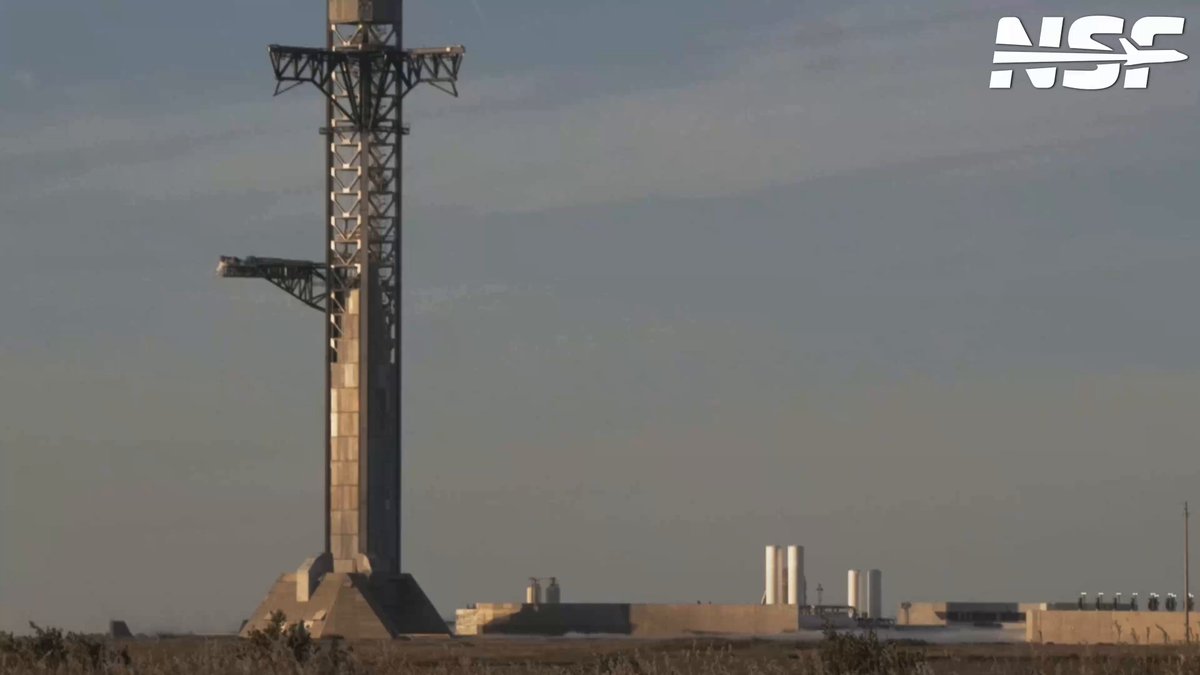
New footage analysis by Starbase infrastructure analyst Zack Golden (@CSI_Starbase) is shedding light on a gas generator anomaly that occurred during a recent Starship launch sequence. The findings, shared on November 24, complicate the initial picture and point to a failure mode that was hidden in plain sight — obscured by the very plume the system produces.

The analysis draws on footage originally captured by @NASASpaceflight and builds on Golden's earlier explanation of the anomaly, which some observers had questioned. This deeper dive appears to answer several of those doubts — and raises a few new ones. For context on the broader Flight 15 mission, see our earlier coverage of the key details heading into that launch.
1. New footage confirmed what a healthy gas generator actually looks like
Golden's re-examination of the NSF clip revealed something that wasn't visible in earlier review passes: large flames emanating from a functioning Apex gas generator, visible through the nitrogen plume surrounding the system. This is significant because it gives analysts a baseline — a visual reference for normal operation — against which the failed unit can be compared. Without that reference, distinguishing a malfunction from expected behavior in such a plume-heavy environment is genuinely difficult.
2. The healthy unit appeared to throttle during the sequence
Beyond simply confirming ignition, Golden noted what appears to be the functioning gas generator throttling up to a higher output setting before returning to a lower one. If accurate, this suggests the control system was actively managing output during the launch sequence — a level of dynamic behavior that adds complexity to diagnosing what went wrong with the adjacent unit, since any failure analysis has to account for a system that wasn't operating at a fixed state.
3. The failed unit was likely compromised mid-sequence, not at startup
One of the more consequential conclusions in Golden's analysis: because there was no explosion at startup, he believes the failed gas generator was actually still intact at ignition. The working theory is that it was compromised sometime during the launch sequence itself, with the failure obscured by the nitrogen plume. This shifts the failure window significantly — from a pre-ignition or ignition-phase event to something that developed under operational stress.
4. Excessive vibration is the leading suspect — and a weld failure the likely mechanism
Golden points to the extreme vibration environment of the launch sequence as the probable cause. Specifically, he speculates the failure could come down to a weld on either the flange that connects the gas generator to the exhaust manifold, or on the unit itself. Weld integrity under sustained high-frequency vibration is a known challenge in rocket engine development, and in a system as mechanically loaded as Starship's Stage Zero infrastructure, even a minor material defect can propagate rapidly once thermal and mechanical cycling begins.
5. Audio captured the gas generator ignition — and the sonic boom that followed
In a follow-up post, Golden flagged that he had left the audio intact on the clip — and that it contains an audible pop from the gas generator ignition, arriving just before the sonic boom. It's a small detail, but one that matters for analysts trying to reconstruct the exact sequence of events. The temporal relationship between that ignition pop and the boom could help narrow down when in the sequence the anomaly developed.

Golden closes his analysis with confidence that the Stage Zero team will work through these issues — consistent with SpaceX's iterative development philosophy. The gas generator system is, by his own description, extremely complex, and the fact that a healthy unit's behavior is now on record in high-resolution footage gives engineers and outside analysts alike a cleaner baseline for future flights. Whether Flight 15's anomaly leads to a hardware change, a procedural adjustment, or simply a closer inspection protocol before the next launch remains to be seen. For the full picture of what Flight 15 set out to accomplish, our coverage of the return-to-launch-site catch attempt has the broader mission context.
🚀 Following the Starship program? See every test flight, official outcome and the next launch window in our SpaceX Starship Tracker.
Sources & reporting notes
The links below identify the material source records used for this report.
- @CSI_Starbase on X (2026-11-24T20:29:41.000Z) — Direct source
- @CSI_Starbase on X (2026-11-24T20:30:50.000Z) — Direct source
Source links are preserved as published or accessed. See our editorial standards and corrections policy.
The BASENOR Editorial Desk covers Tesla, SpaceX, and related technology, curating reporting from primary sources — official accounts, regulatory filings, and software release data. Every article passes source-record and fact-checking review before publication. About the newsroom.
This report was curated by the BASENOR Editorial Desk from the sources listed above. Read our editorial standards or email editorial@basenor.com to report an error.