

Tesla's fully autonomous Robotaxi service has been expanding at a rapid clip across the US, and the numbers are starting to tell a compelling story. On November 16, 2026, Miami's coverage jumped 92% in a single update — the latest in a string of geofence expansions that have quietly reshaped where and when you can hail an unsupervised Tesla. Here's a city-by-city breakdown of where things stand right now.

1. Austin — 443 sq mi (the flagship)
Austin remains the crown jewel of Tesla's Robotaxi operation. According to background reporting, the service area grew by roughly 63% to reach its current 443 square miles as of early November 2026 — and Austin is where the Cybercab made its public fleet debut on September 4, 2026. With more than 400 autonomous vehicles registered in the city, it's the most mature market Tesla has and the clearest preview of what other cities are building toward.
2. San Antonio — 275 sq mi (biggest day-one launch ever)
San Antonio launched unsupervised Robotaxi service on November 9, 2026, with an immediate geofence of 275 square miles — making it the largest day-one coverage area Tesla has ever opened. The fact that Tesla started San Antonio bigger than Austin's original footprint signals growing confidence in the system's ability to handle new urban environments without a gradual ramp.
3. Houston — 254 sq mi
Houston's 254-square-mile service area makes it the third-largest in the network. As one of the most sprawling cities in the country, a 254-square-mile geofence still covers a meaningful slice of the metro. Houston also launched alongside San Antonio on November 9, continuing Tesla's pattern of multi-city rollouts rather than single-city drips.
4. Fort Worth — 143 sq mi
Fort Worth went live on November 2, 2026, with 143 square miles of coverage. It was the first of the recent wave of Texas expansions and helped establish the template for the San Antonio and Houston launches that followed a week later. The DFW metro now has two active Robotaxi zones — Fort Worth and Dallas — operating independently.
5. Dallas — 81 sq mi
Dallas sits at 81 square miles, making it the smaller of the two DFW-area deployments for now. Given that Fort Worth launched at 143 sq mi, Dallas has room to grow. The two cities together give Tesla a combined DFW footprint of 224 square miles, which starts to approximate a metro-wide presence even if the zones aren't yet contiguous.
6. Miami — 59 sq mi (biggest single-day expansion: +92%)
Miami is today's headline. As reported by Sawyer Merritt, Tesla added 28 square miles to Miami's geofence on November 16, bringing the total from 31 to 59 square miles — a 92% increase in a single update. The expanded zone now stretches from the Miami International Airport corridor east to downtown and Biscayne Bay, according to background reporting. Miami was one of Tesla's earlier Florida deployments, and this expansion suggests the system has been performing well enough to justify a near-doubling of the coverage area.

7. Orlando — 26 sq mi & Tampa — 24 sq mi
Florida's two smaller markets round out the current eight-city network. Orlando and Tampa each sit in the mid-20s for square mileage, putting them closer to where Miami started before today's expansion. If Miami's trajectory is any guide, both cities could see significant geofence growth as Tesla accumulates more unsupervised miles in those environments. As of late September 2026, the broader Robotaxi fleet had logged over 3.3 million cumulative unsupervised miles — a data set that directly informs where and how fast Tesla is willing to expand.
8. 24/7 operations — across all eight cities
Perhaps the most operationally significant development isn't a geofence number at all. On November 12, 2026, Tesla announced that Robotaxi service now runs 24 hours a day, seven days a week in every active city. Round-the-clock availability changes the calculus for riders and for Tesla's unit economics — more hours means more rides per vehicle per day, which is the core lever for making the service commercially viable at scale.
Las Vegas, Phoenix, and Jacksonville are listed as coming soon, meaning the eight-city map is almost certainly not the final picture for 2026. The pace of expansion — multiple cities in a single week, a near-doubling of Miami's coverage in one update — suggests Tesla is moving through its rollout checklist faster than most observers expected even a few months ago.
🚕 Following the Robotaxi rollout? See every operating city, launch date and announced market in our Tesla Robotaxi Tracker.
Related Gear
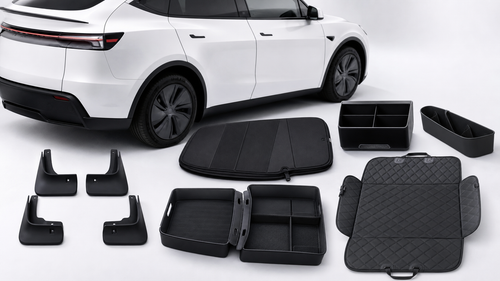
Gear up your Tesla with tested, custom-fit BASENOR accessories — shop Tesla accessories →
Related coverage
Sources & reporting notes
The links below identify the material source records used for this report.
- @SawyerMerritt on X (2026-11-16T15:15:43.000Z) — Direct source
- @SawyerMerritt on X (2026-11-16T15:35:23.000Z) — Direct source
- @wholemars on X (2026-11-16T15:45:04.000Z) — Direct source
Source links are preserved as published or accessed. See our editorial standards and corrections policy.
The BASENOR Editorial Desk covers Tesla, SpaceX, and related technology, curating reporting from primary sources — official accounts, regulatory filings, and software release data. Every article passes source-record and fact-checking review before publication. About the newsroom.
This report was curated by the BASENOR Editorial Desk from the sources listed above. Read our editorial standards or email editorial@basenor.com to report an error.